

Designing an AI companion that understands where you are, where you're going, and what might help you get there.
One Companion experience around different people, contexts and goals.
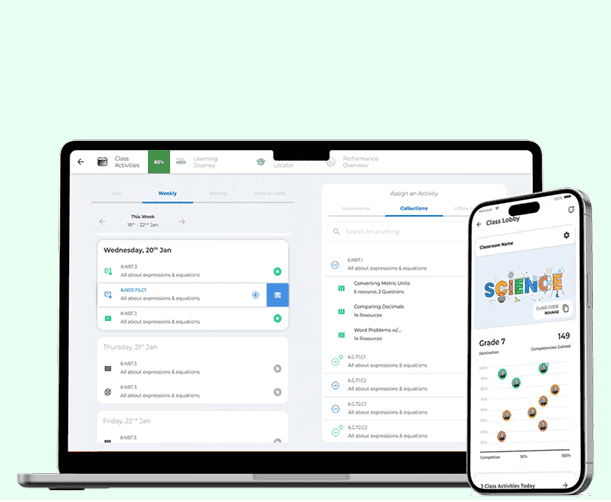
Contents · 11 chapters
The shift
MyGooru already had years of intelligence around learners — their goals, beliefs, progress, competencies and personalized pathways.
But the way people interacted with AI was changing. ChatGPT and Claude had made conversation a familiar interface for intelligence. That opened a different question for us:
What if users didn't have to navigate the system to find what they needed? What if the system could understand their context and meet them there?
That became the Companion. But this couldn't just be another chatbot.
A learner asking “What should I learn next?” needs something fundamentally different from an instructor asking “Who in my class needs help?” The challenge became designing one Companion experience around different people, contexts and goals.
- ROLE
- Product Designer
- TIMELINE
- Jan 2026 – Present
- SCOPE
- Learner · Instructor · Mentor · Companion System
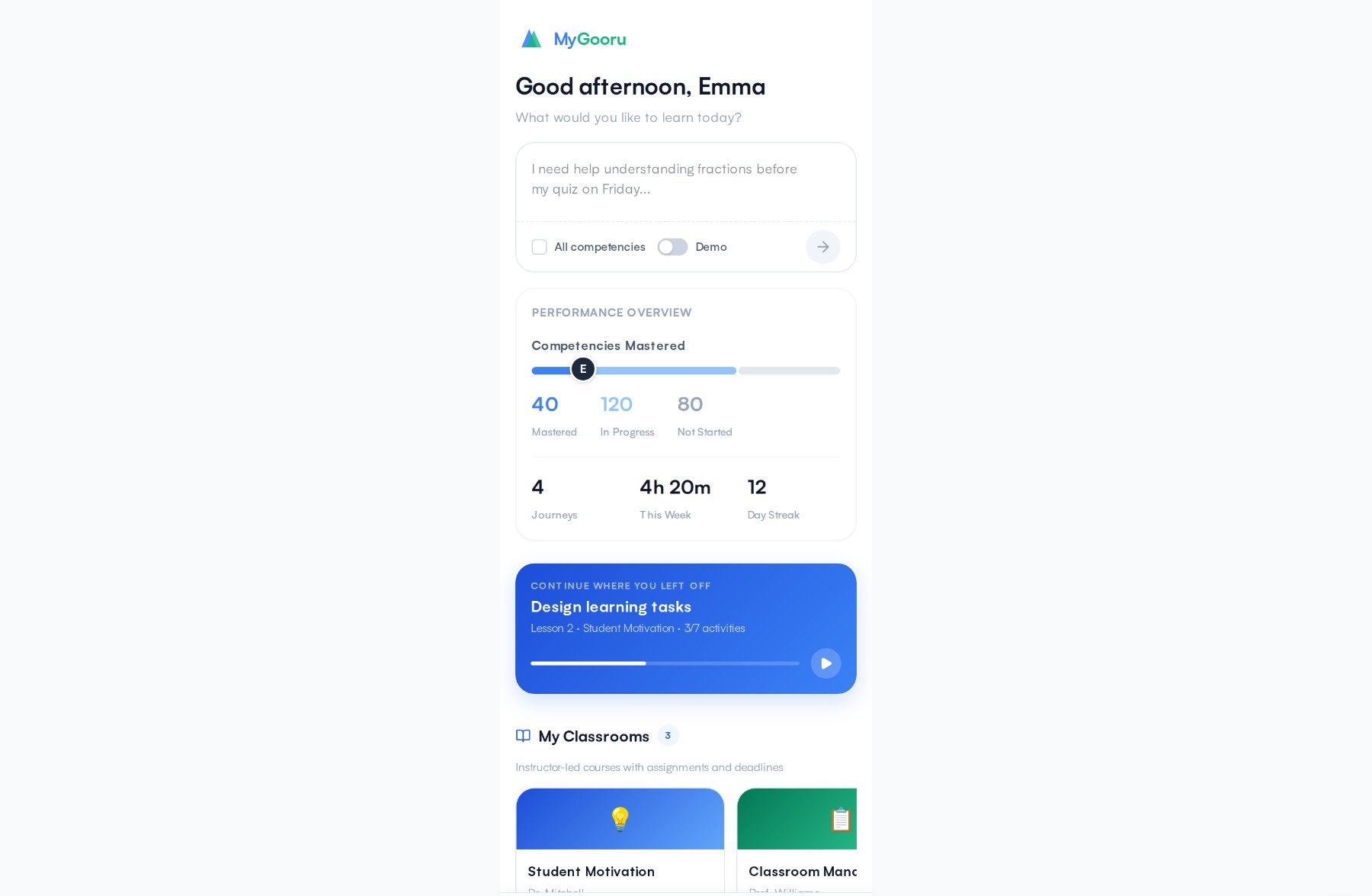
Client work under NDA. The screens below are captured from the working prototypes I designed and built; the client organisation and all commercial specifics are withheld. Learner, educator and class names and every figure shown are seeded demo data.
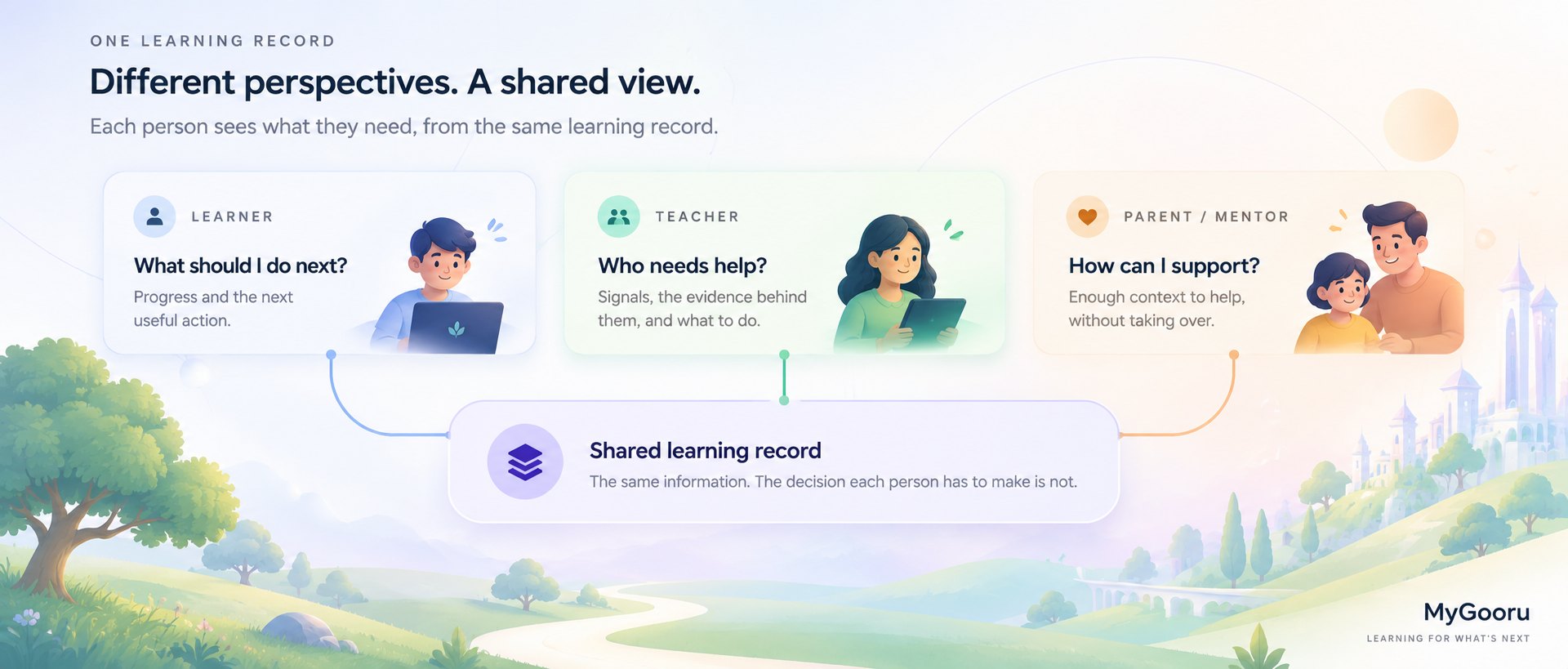
One system. Three perspectives.
Learner — help me move forward. Start learning from almost anywhere. The Companion understands the learner through their context, beliefs, goals, progress and Portrait of a Graduate — connecting them to pathways, nudges and relevant next steps.
Instructor — help me understand my learners. See where learners are, identify who may need support, receive recommendations, assign activities and get suggestions for what could help them move forward.
Mentor — help me guide my mentees. Understand a mentee's progress, learning journey and pathways without having to reconstruct their context from scratch.
Help me move forward
The learner's home opens on a question, not a menu: “What would you like to learn today?” They can type or speak something as ordinary as needing help with fractions before Friday's quiz.
Under it sits only what helps them keep going — what is due this week, the time spent and their streak — and a card that picks up where they left off.
For a learner, the Companion looks inward: where am I, and what should I do next?
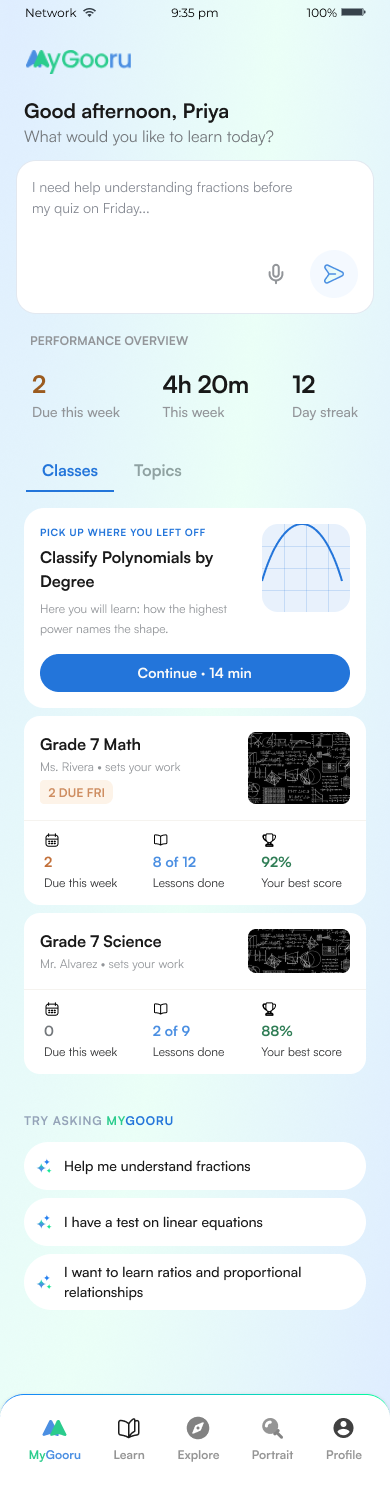
Classify Polynomials by Degree
Here you will learn how the highest power names the shape.
Continue · 14 min →2 due · 4h 20m · 12-day streak
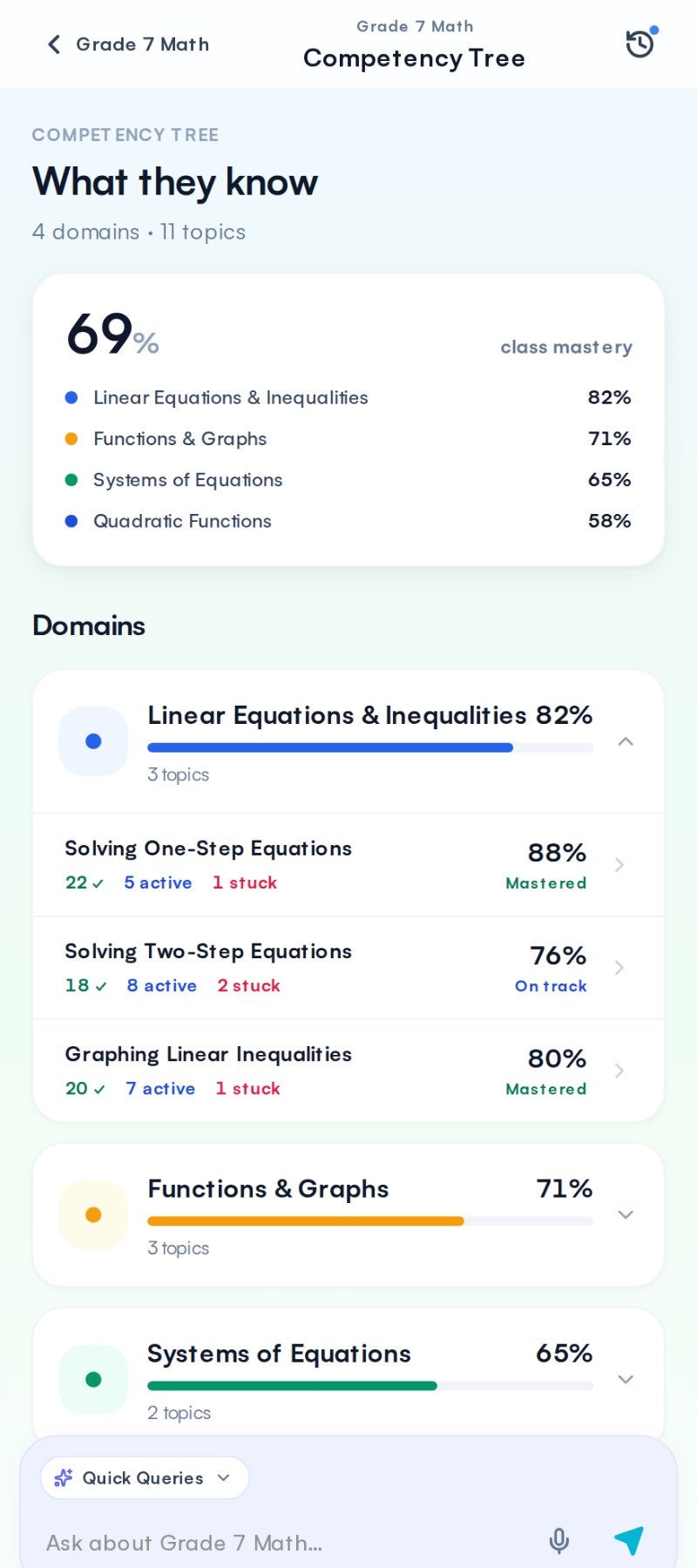
Help me understand my learners
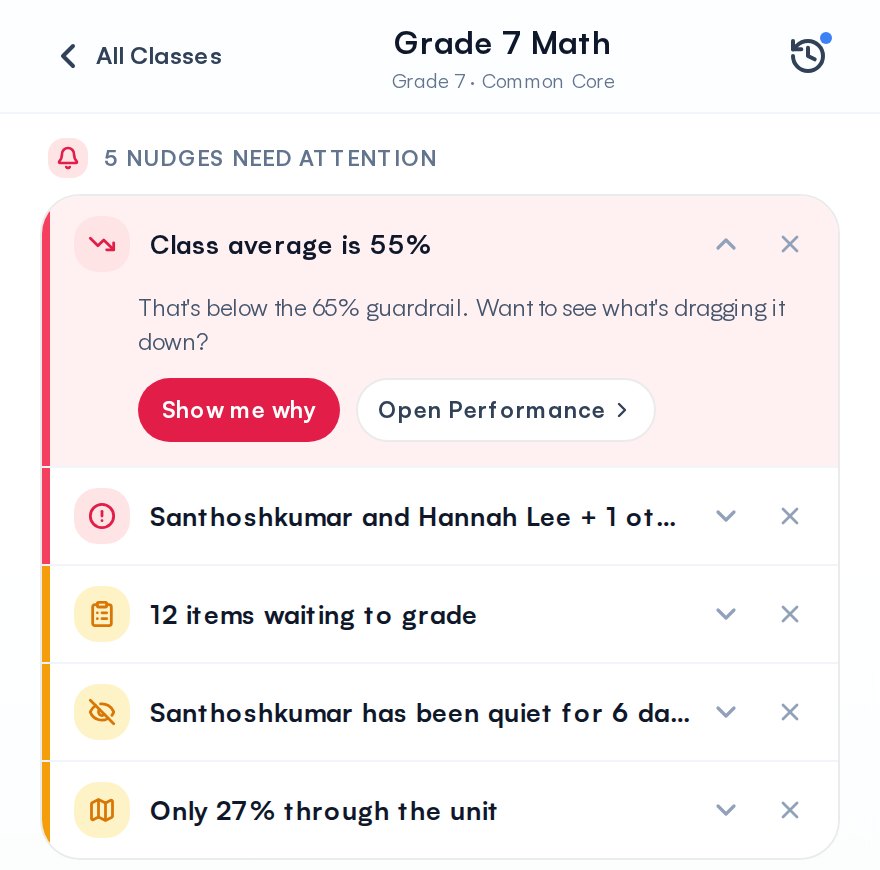
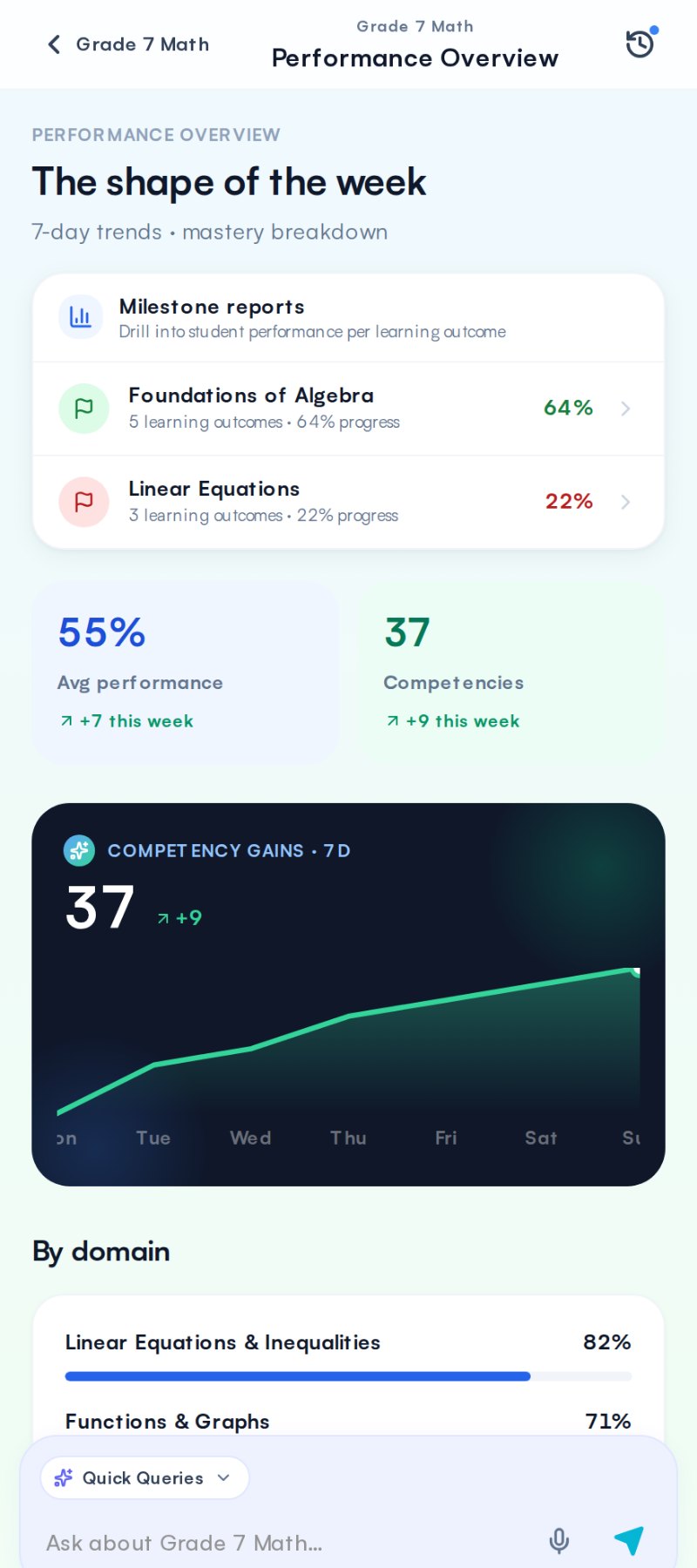
For an instructor, the Companion looks across learners: where is everyone, who needs attention, and what can I do?
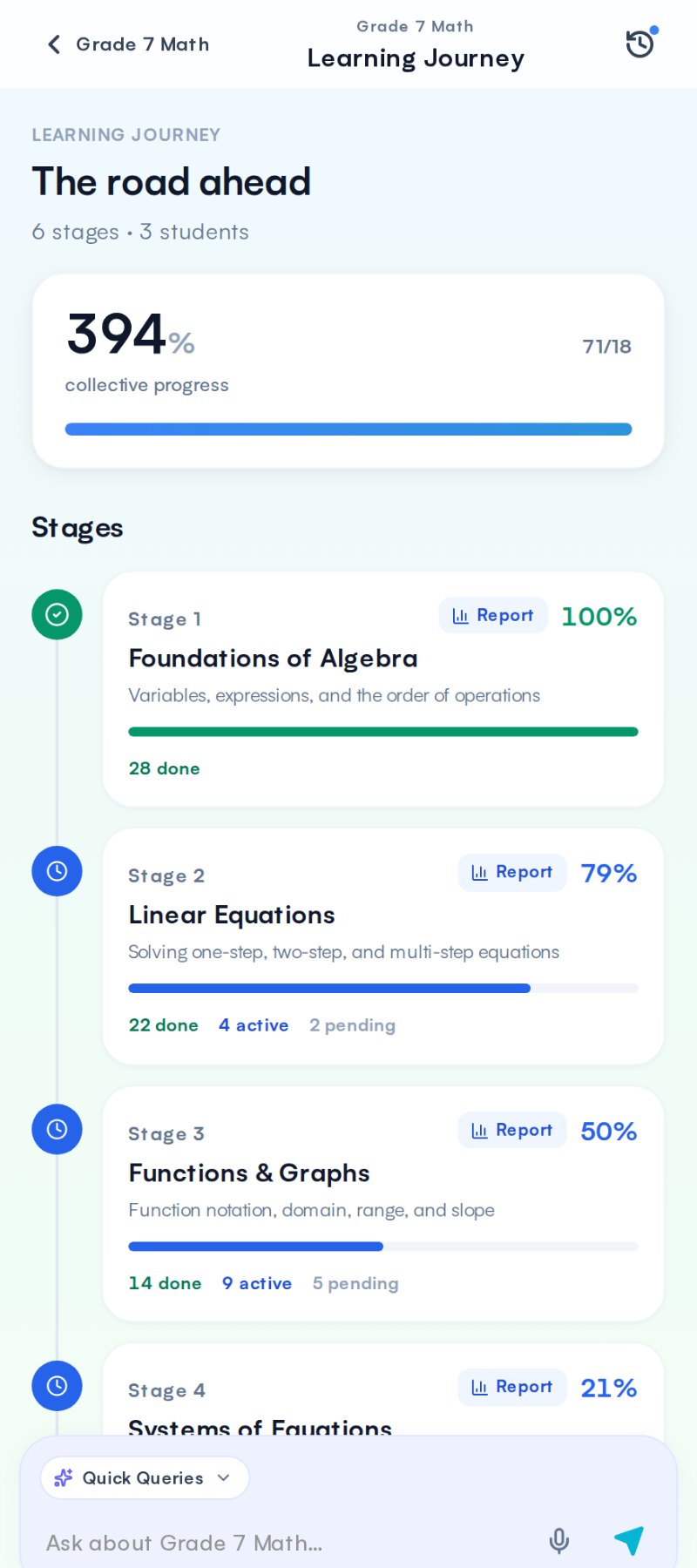
On the Learning Journey it reads the class milestone by milestone, and says why the class is held up — not just that it is.
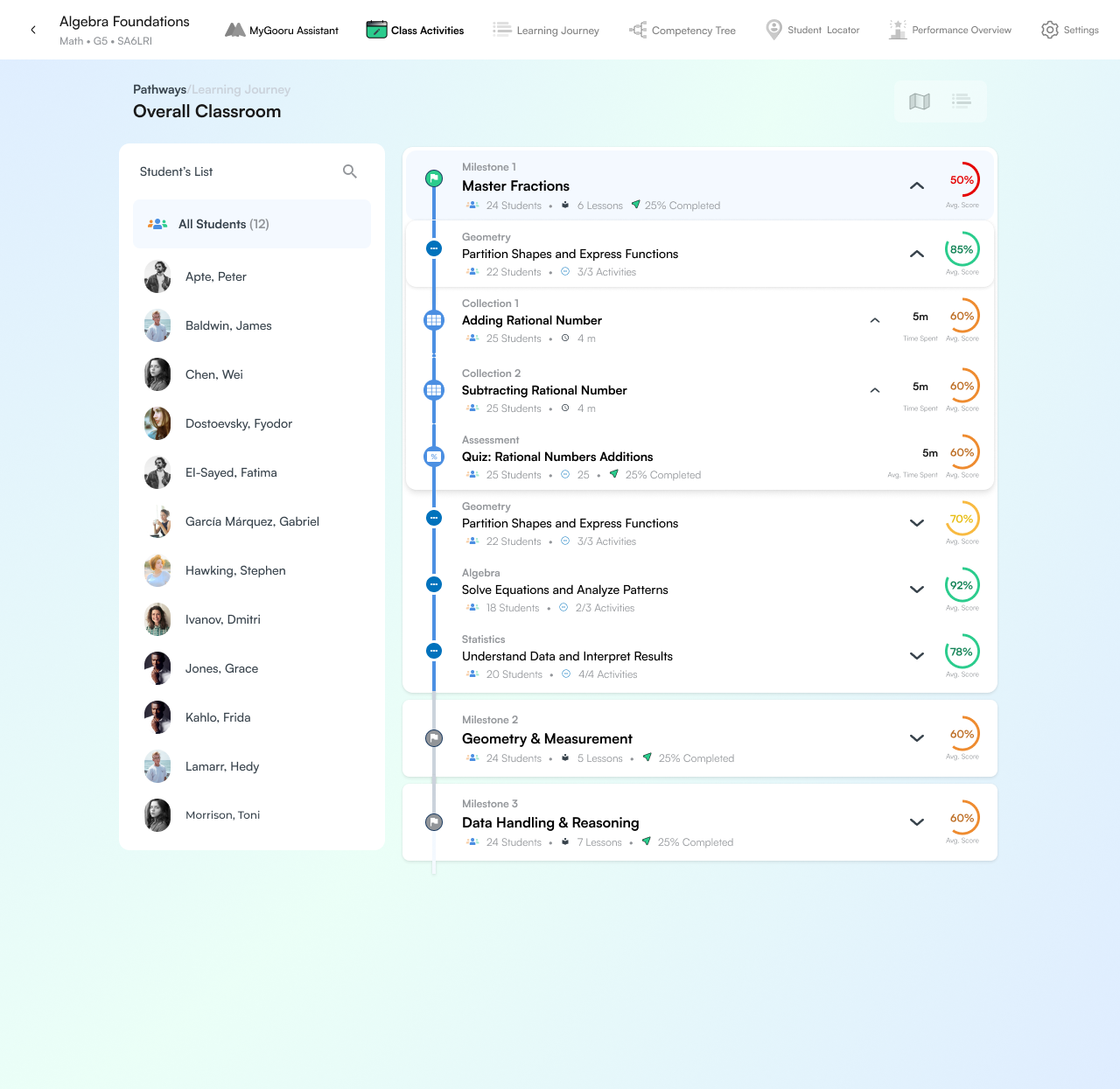
They all stopped at the same lesson, and it is not the hardest one.
22 of 24 cleared the lesson before. 6 cleared this one — and 5 of those worked on paper first.
Assign the paper-first version →In Class Activities it reads what was assigned and points at the one activity that needs the teacher.
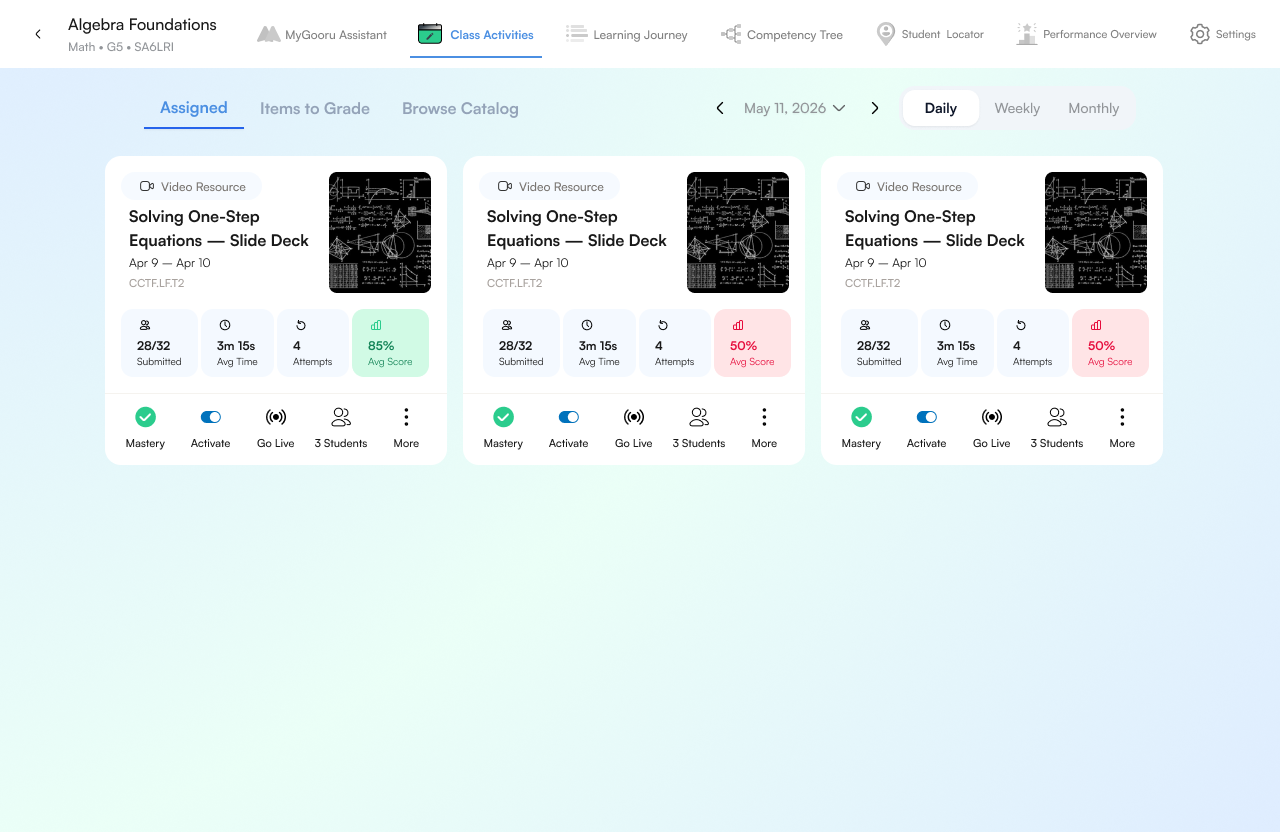
The slide deck is not a marking problem.
Average time was three minutes on a fifteen-minute deck. They clicked through it.
Show me what they skipped →And when work comes in, it puts the grading in order: what it can mark itself, and the written answers only a teacher should.
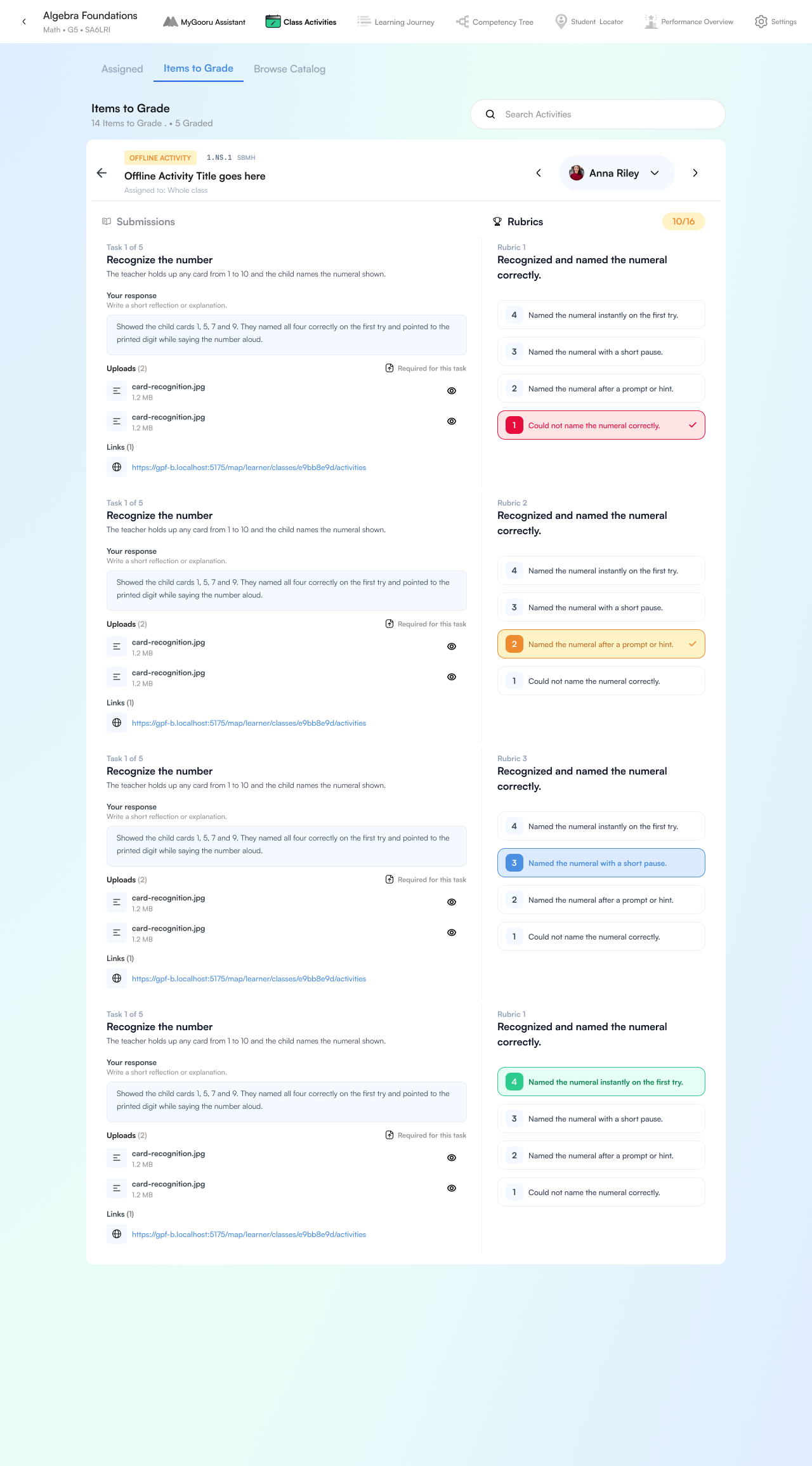
The five written pieces carry all the information.
Fyodor and Gabriel made the same wrong turn — one reply covers both.
Open the five written →Help me guide my mentees
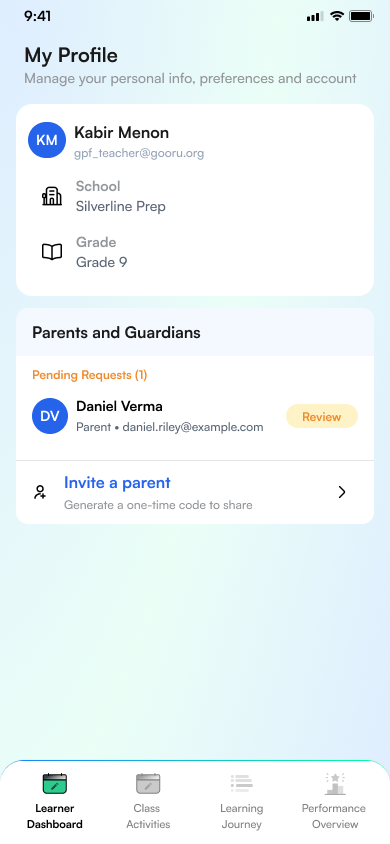
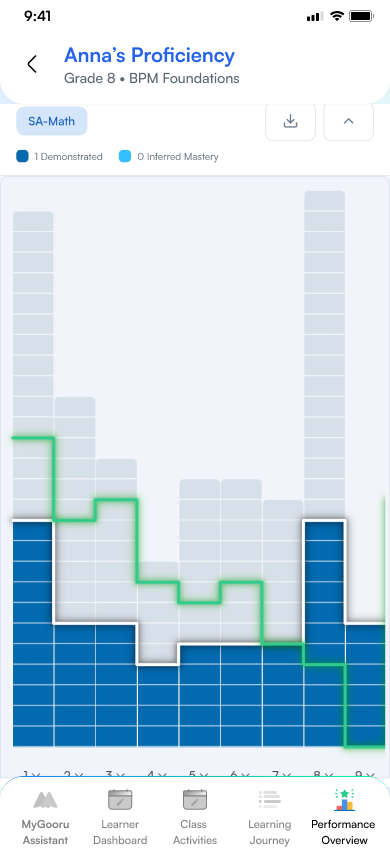
A mentor is linked to a learner, never assigned one. The learner approves the request, sees exactly what the mentor will get — dashboard, learning journey and proficiency, read-only, and a weekly summary — and can revoke it from their profile.
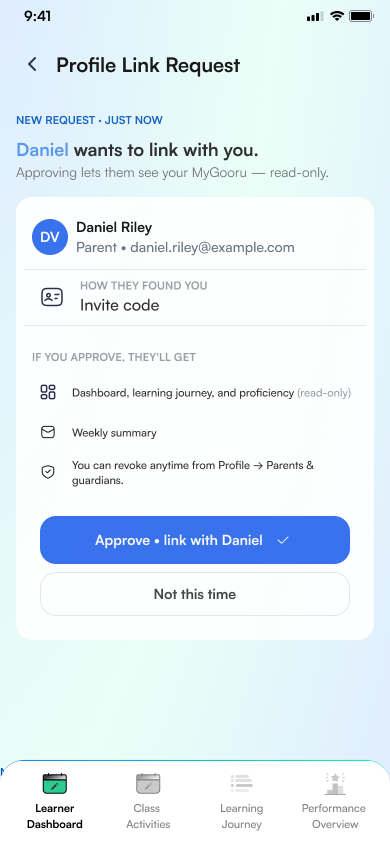
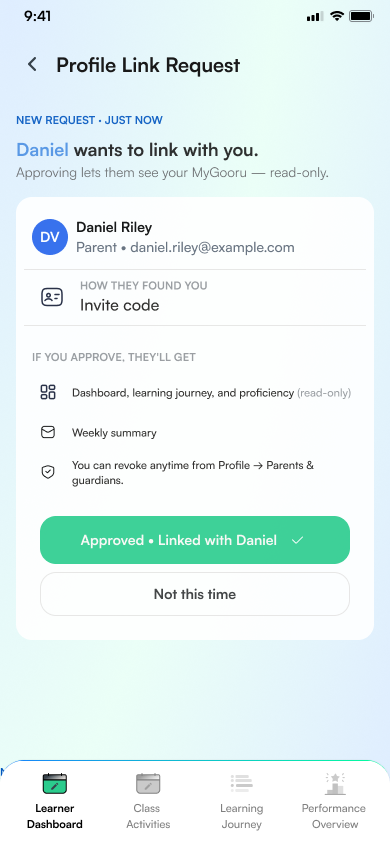
For a mentor, the Companion follows the individual over time: how is my mentee progressing, and where might I support them?
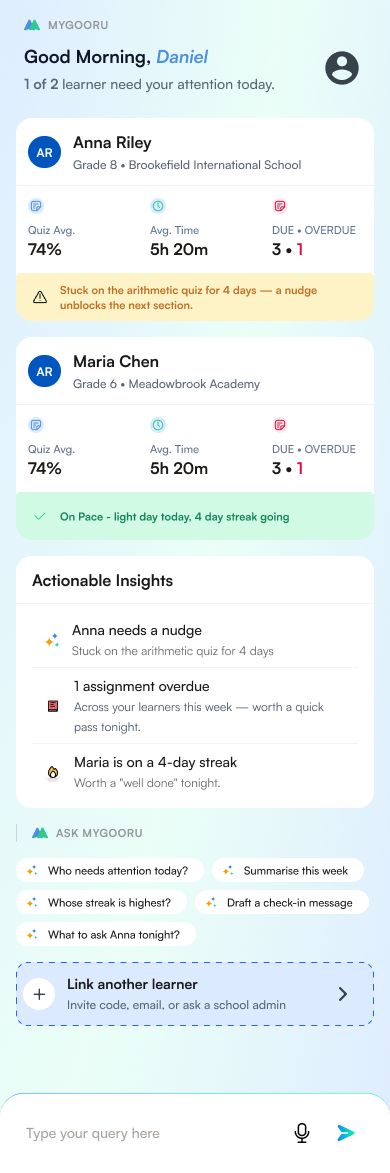
Anna needs a nudge
Stuck on the arithmetic quiz for 4 days — a nudge unblocks the next section.
1 assignment overdue
Across your learners this week — worth a quick pass tonight.
Maria is on a 4-day streak
Worth a “well done” tonight.
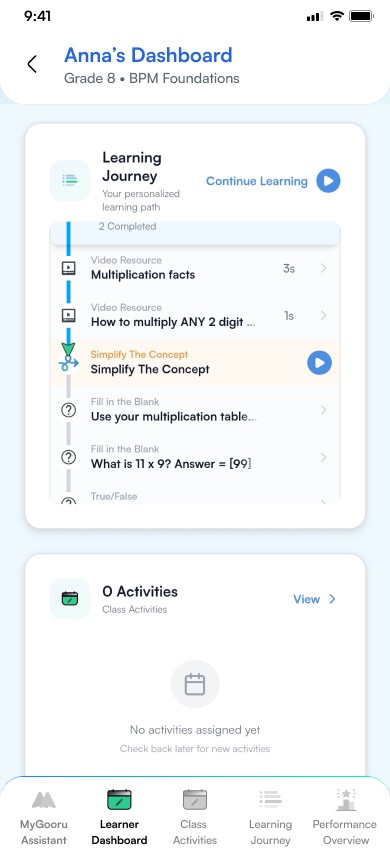
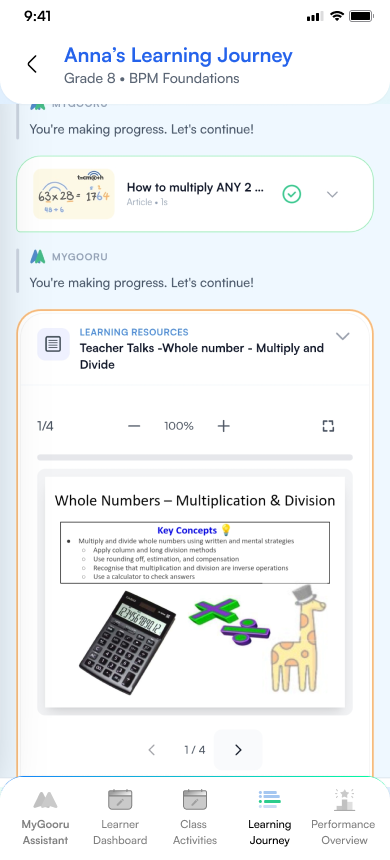
From there the mentor can open the same views the learner has — dashboard, learning journey and proficiency — without having to reconstruct their context from scratch.
Designing beyond chat
The Companion can be conversational, but conversation isn't the product. The intelligence behind it is.
As someone uses MyGooru, the system builds an evolving understanding of who they are, what they believe, where they are, where they're going and how they might get there.
Instead of every conversation beginning from zero, this context carries into what happens next.
What comes next isn't arbitrary
The Companion doesn't simply generate the next piece of content from a prompt.
Behind the experience, EcPA rules help determine what content should come next based on the learner and their evolving context. That means a pathway isn't just a static sequence.
For the learner, the experience can feel simple. Underneath, the system is continuously deciding what is relevant next.
Starting from anywhere
Because the Companion carries context, learning doesn't have to begin from a traditional course page.
A learner can enter from a question, an interest, a pathway, an activity or something happening in their current context. The Companion connects that moment back to the larger learning journey.
This was an important shift from designing navigation around where content lives to designing an experience around where the learner currently is.
The same intelligence changes with the relationship
For a learner, the Companion looks inward: Where am I? What should I explore next?
For an instructor, it looks across learners: Where is everyone? Who needs my attention? What can I do?
For a mentor, it follows the individual over time: How is my mentee progressing? Where might I support them?
The underlying learning system remains connected. The perspective changes.
From learning to a Companion model
The work started with Learner, Instructor and Mentor, but the underlying idea wasn't inherently limited to education. It could apply to very different kinds of journeys.
That eventually became important as we began exploring the Companion across other domains.
But Learning was where we first had to make that intelligence feel understandable, contextual and useful to the person using it.
What I took away
Working on the Companion changed how I think about AI products.
The interesting part wasn't designing a chat interface. It was designing how an intelligent system becomes understandable to the person using it — while much of the complexity, rules and reasoning continue underneath.
The interface became simpler. The system behind it became more contextual.
CURRENT
A personalised resilience companion for people living with cancer.