
Designing across a connected learning ecosystem
From Junior Designer on MyNavigator to the sole designer across its learner, instructor, mentor and library products.
Contents · 9 chapters
Designing across a connected learning ecosystem
I joined Gooru in July 2022 as a Junior Designer, when the product was still called MyNavigator.
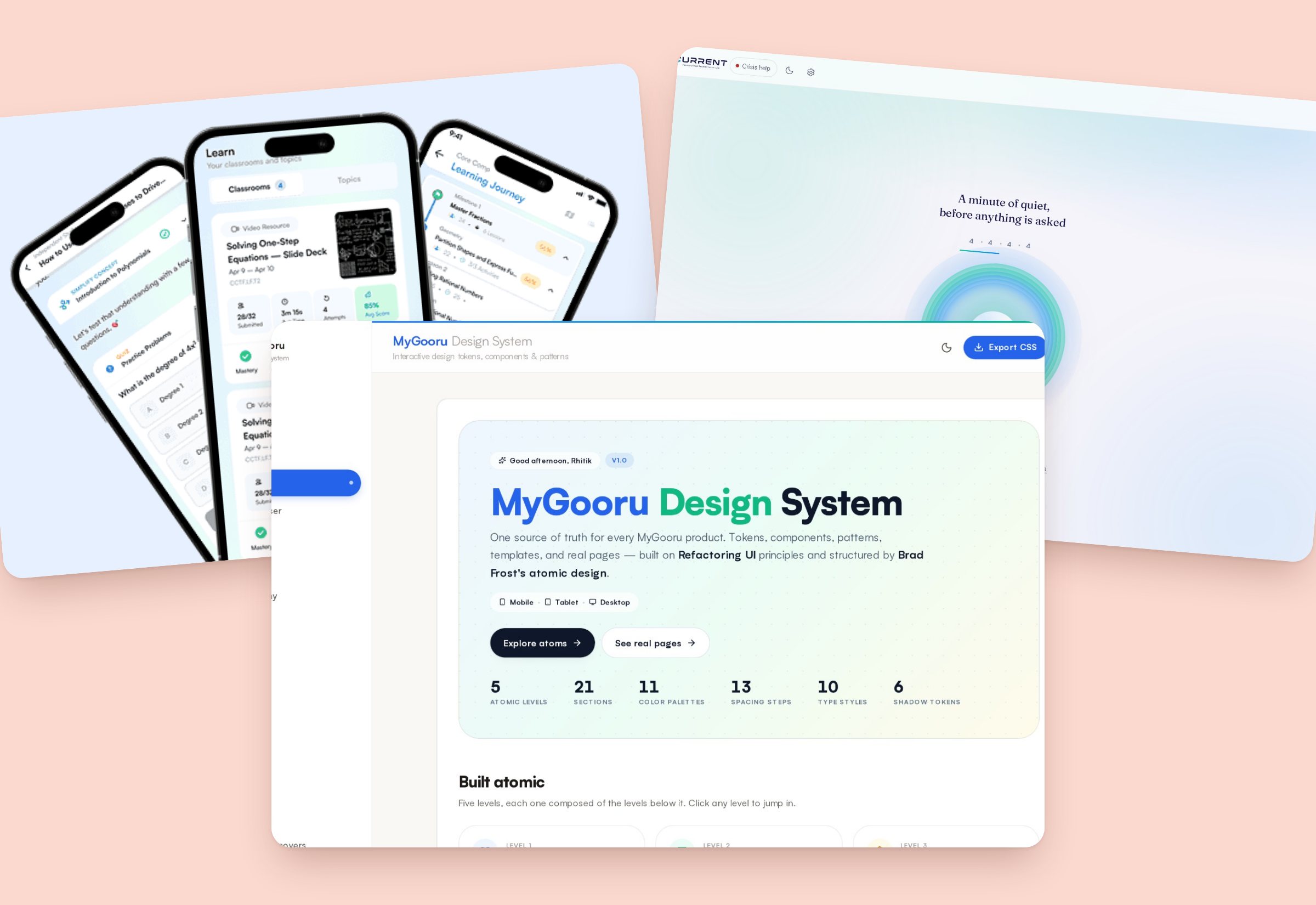
MyNavigator was not a single product. It was a connected ecosystem built around learners and the people supporting them—with separate experiences for learners, instructors, mentors, and teams building the learning structures behind them.
I initially worked across individual features alongside another designer. Over time, I took ownership of larger workflows and products, eventually becoming the sole designer across the ecosystem and moving into a Product Designer role.
- ROLE
- Junior Designer → Product Designer
- WORKED WITH
- CTO · Product Manager · Engineering
- PRODUCTS
- Learner · Instructor · Mentor · Library · Design System
- TIMELINE
- 2022 onwards
Internal product work. Unreleased surfaces, roadmap and commercial specifics are withheld.
Designing for different sides of the same system
Each product served a different purpose, but they were connected through the learner and the underlying learning data.
Instead of trying to make every experience identical, the challenge was deciding what each user needed to see, understand and act on.
Making the learning journey easier to navigate
The Learner experience was where students understood their learning journey—where they were, what they were working towards, and what came next.
I worked across different parts of this experience, simplifying complex learning information into something learners could understand and act on.
The interface had to make progress visible without exposing all of the complexity underneath it.
Turning learner data into something instructors could act on
The same information needed a very different hierarchy for instructors.
Instead of navigating one person's journey, instructors needed to understand what was happening across learners and identify where their attention was needed.
I worked across the Instructor experience to make learner progress easier to scan, understand and act on. That difference shaped how the same underlying learning information was presented across the two products.
Supporting the individual learner
Mentor introduced another perspective.
Unlike instructors working across groups of learners, mentors needed a more focused understanding of an individual—their journey, progress and areas where support might be useful.
I worked on the Mentor experience to organize that information around the relationship between a mentor and learner rather than reproducing the Instructor experience at a smaller scale.
Designing the structures behind the learning experience
Library exposed a very different side of the ecosystem. While Learner, Instructor and Mentor consumed learning information, Library was where parts of those learning structures could be created and managed.
One of the experiences I worked on was Marker—including creating a Marker, building its map and working with competencies. These workflows contained considerably more structural complexity than the learner-facing experiences.
My job was to make that complexity manageable without removing the control users needed to construct these learning structures. Rather than showing everything simultaneously, the experience progressively introduced the structure as users moved deeper into the workflow.
Building consistency across products
Working across several products also meant repeatedly encountering the same interaction problems.
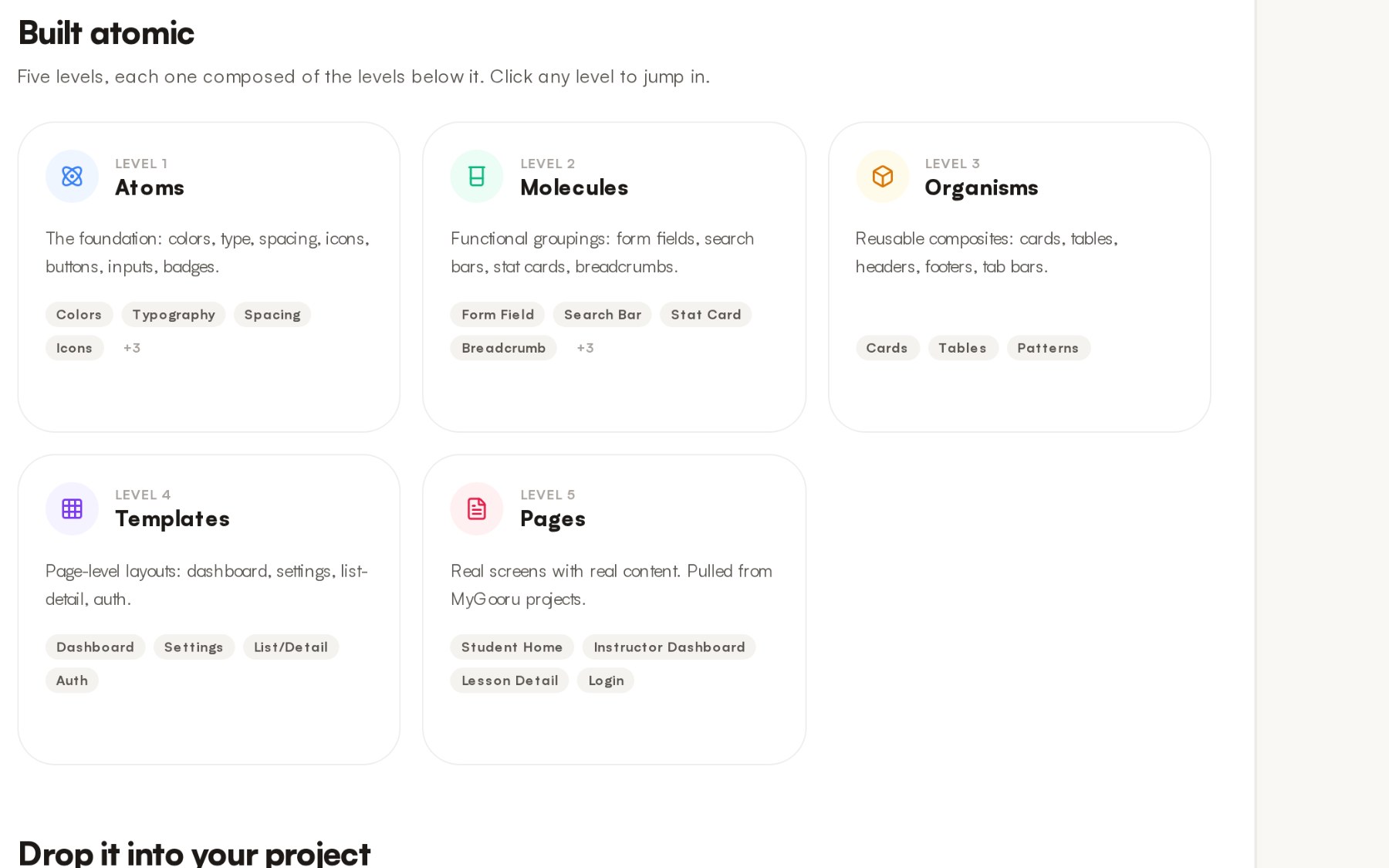
There was already a component library when I joined. As my ownership expanded, I evolved it alongside the products—strengthening existing components, adding missing states and introducing reusable patterns where the same problems appeared repeatedly.
The goal wasn't to make Learner, Instructor, Mentor and Library look identical. It was to give them shared foundations while allowing each product to serve a different job.
From individual features to product ownership
My role changed considerably during my time on MyNavigator.
I joined designing individual sections as a Junior Designer. As I became more familiar with the ecosystem, I began owning complete workflows across its different products. Eventually, I became the sole designer working directly with the CTO and Product Manager.
That progression changed the level at which I approached problems—from thinking primarily about individual interfaces to considering how decisions worked across products.
The next chapter
The product continued to evolve. MyNavigator eventually became MyGooru, and the way people interacted with the underlying system began changing as well.
The next phase of my work explored a very different question:
What happens when navigating a complex ecosystem starts becoming a conversation?
→ MyGooru Companion — next case study
Curriculum Crosswalk
Curriculum data scattered across spreadsheets, turned into one connected model — and the Crosswalk, Dependencies, Learning Journey Builder, Coverage, Resource Map and Companion workflows built on it, closing the loop from curriculum gap to content planning.