
Giving Maqaam a digital home they could own
Maqaam Foundation works with artists with disabilities. When I met its founder, it didn't have a website.
Contents · 7 chapters
Giving Maqaam a digital home they could own
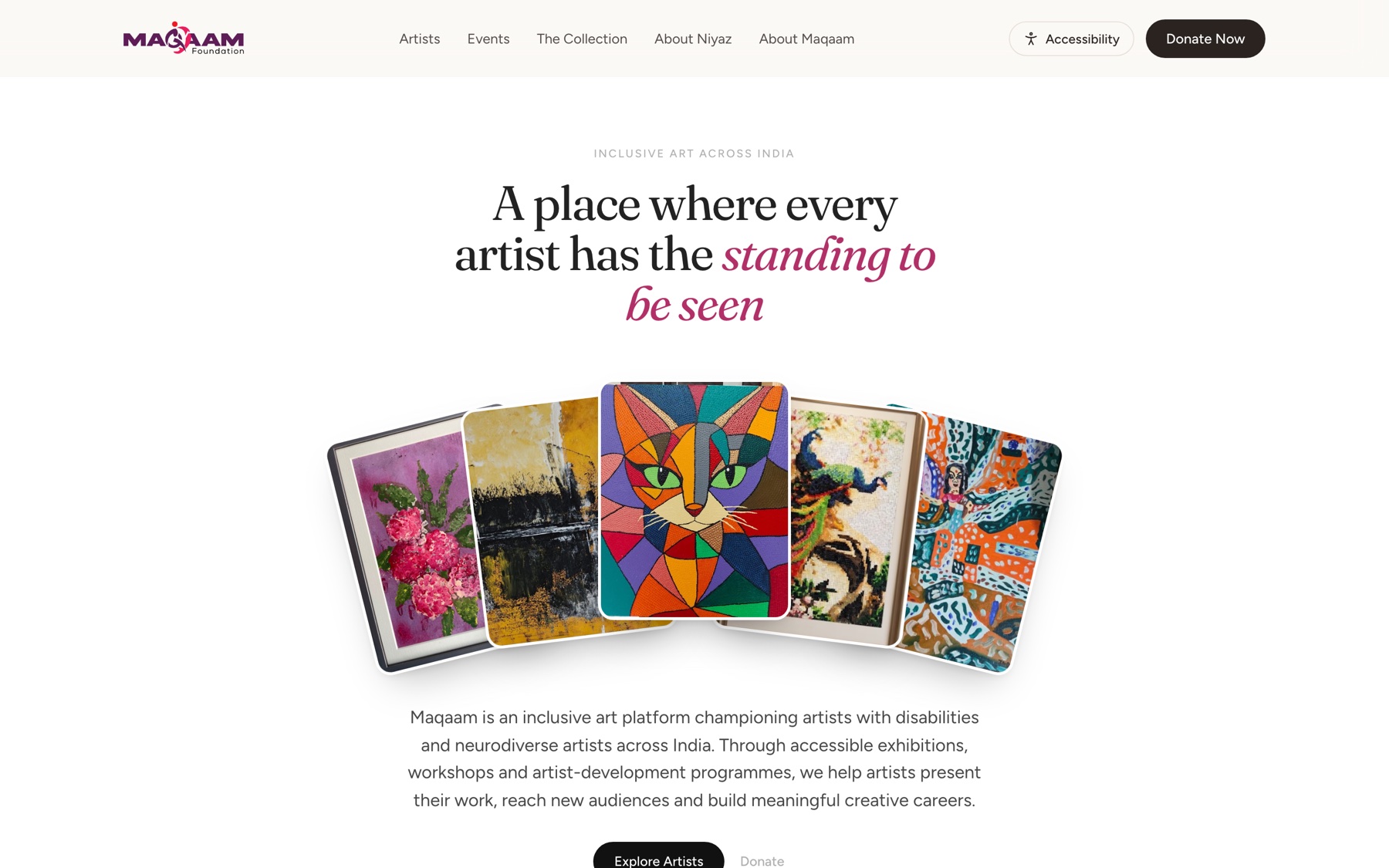
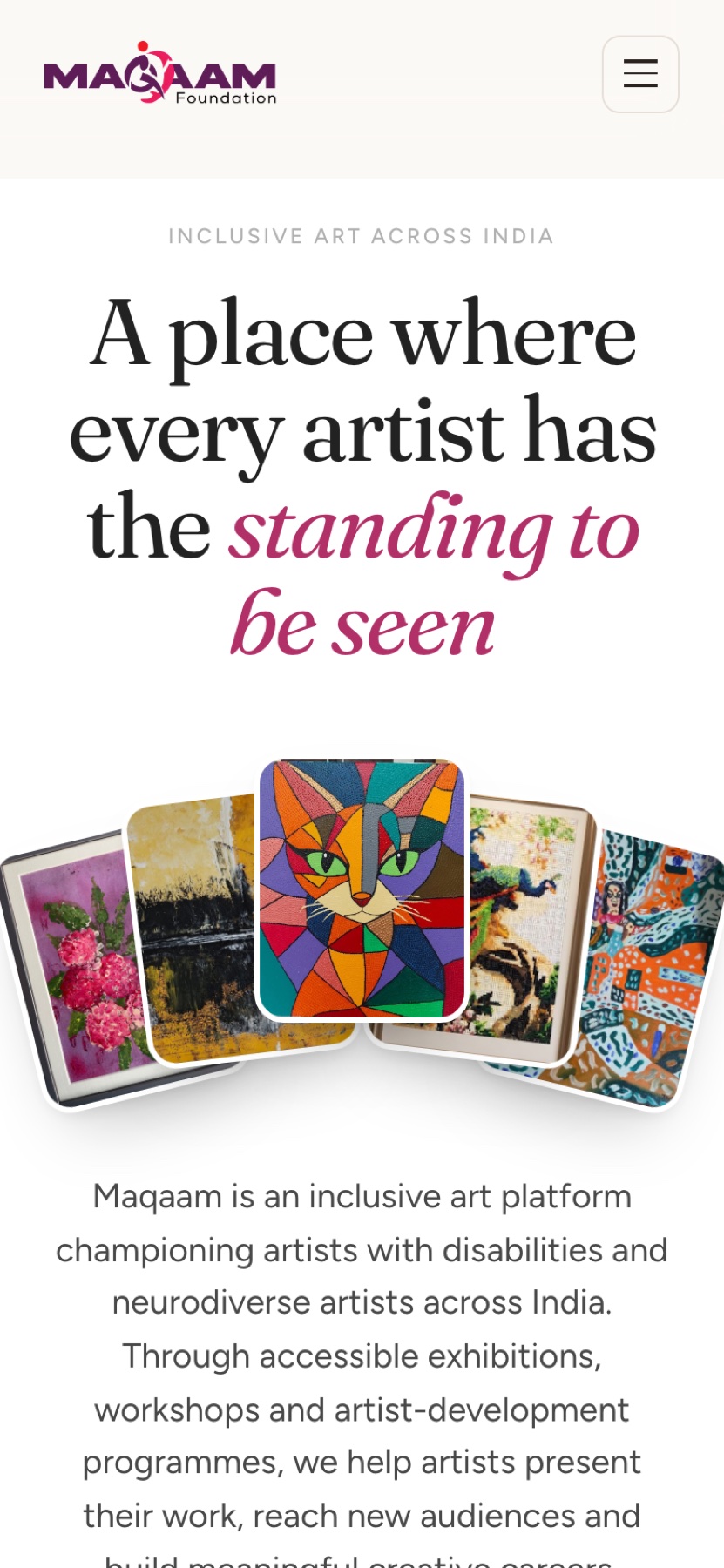
Maqaam Foundation works with artists with disabilities, creating spaces for their work to be seen, experienced and recognised.
When I met founder Niyaz Hussain through a mutual friend, Maqaam didn't have a website.
Their work existed — artists, exhibitions, events, photographs, documents and years of stories — but most of it was scattered across Google Drive, Google Docs, Instagram and WhatsApp forwards.
The challenge wasn't simply to put Maqaam online. It was to give all of that work a home.
- ROLE
- Website design · Framer development
- SCOPE
- Website Design · Framer Development · CMS · Accessibility
- TIMELINE
- July–August 2026
- LIVE
- maqaam.in
From WhatsApp forwards to an owned platform
Instagram and WhatsApp were doing most of the work of communicating what Maqaam was doing.
That worked for immediate updates, but made it difficult to understand the larger body of work behind the foundation. Artist stories disappeared into feeds. Previous events were difficult to discover. Information lived across folders and documents.
Niyaz also needed a place where Maqaam's work could be presented properly as part of his application for a National Award.
So instead of approaching this as a small brochure website, I started thinking about how the website could become Maqaam's growing archive.
Structuring years of work
The raw material wasn't sitting neatly inside a CMS. Niyaz had years of photographs, Google Drive folders, Google Docs and information collected through the foundation's work.
I worked through that material and began translating it into a structure that made sense on the web. Two parts became particularly important:
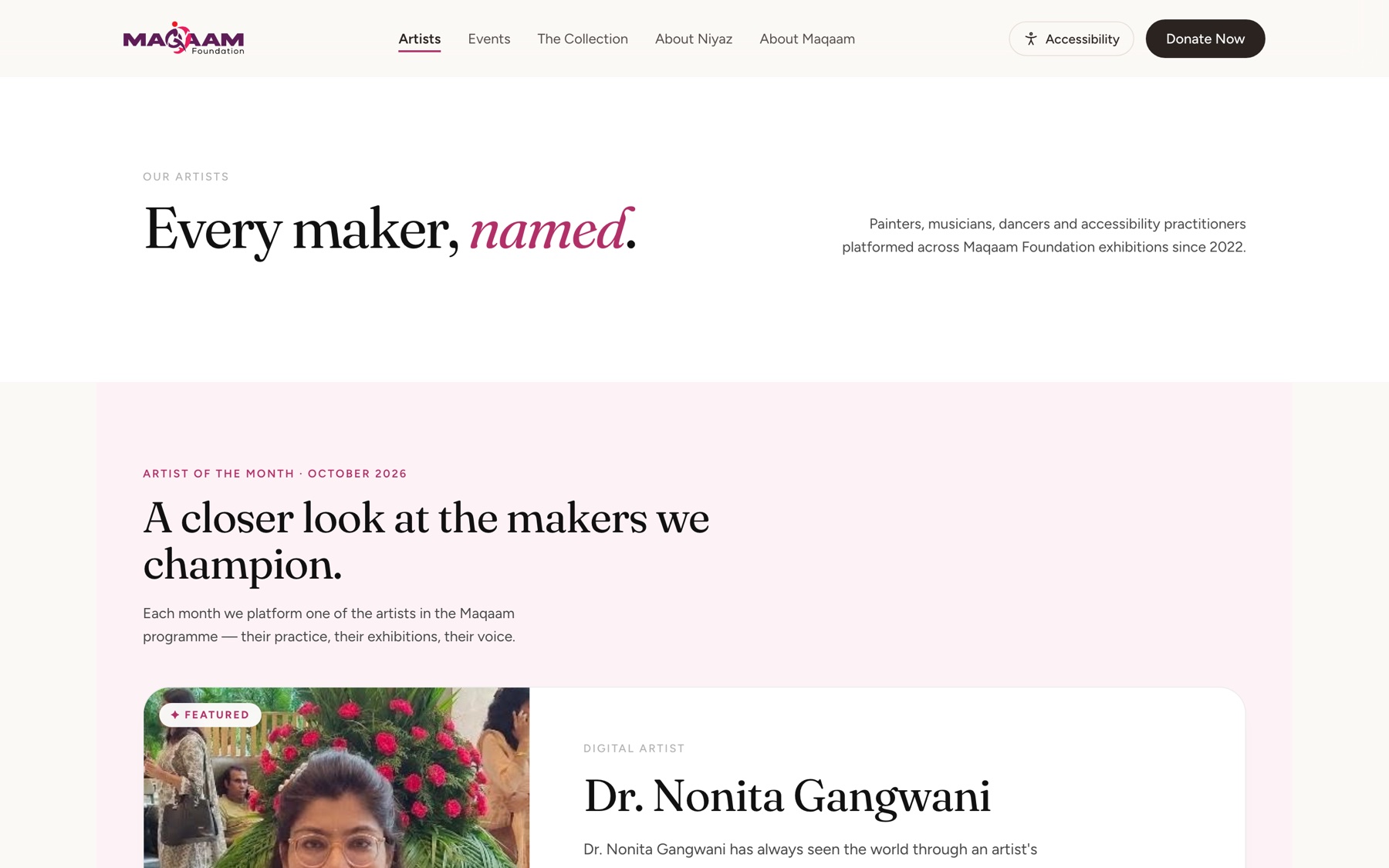
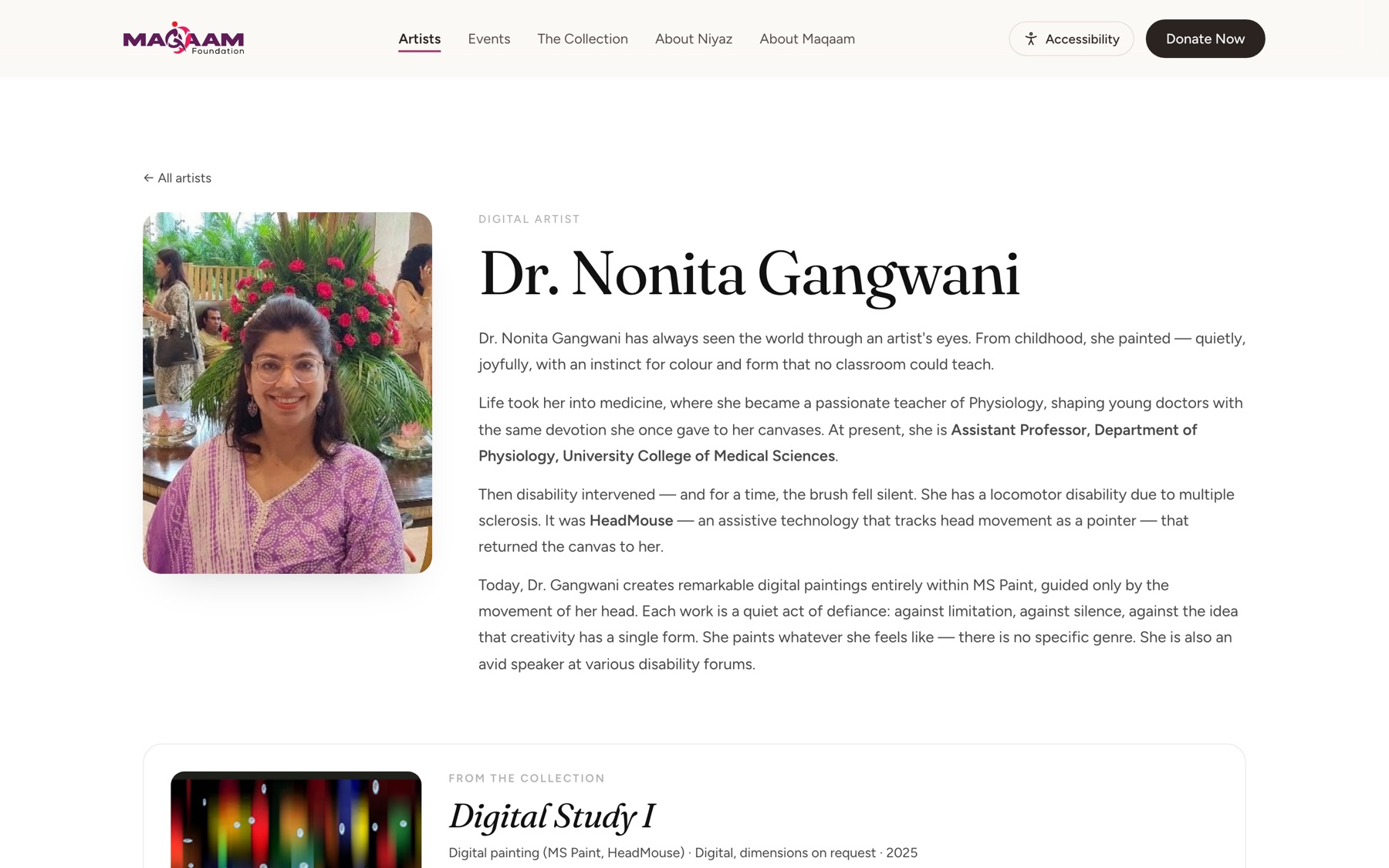
Artists — a growing collection where Maqaam could document the artists it works with and give their work a permanent place to be discovered.
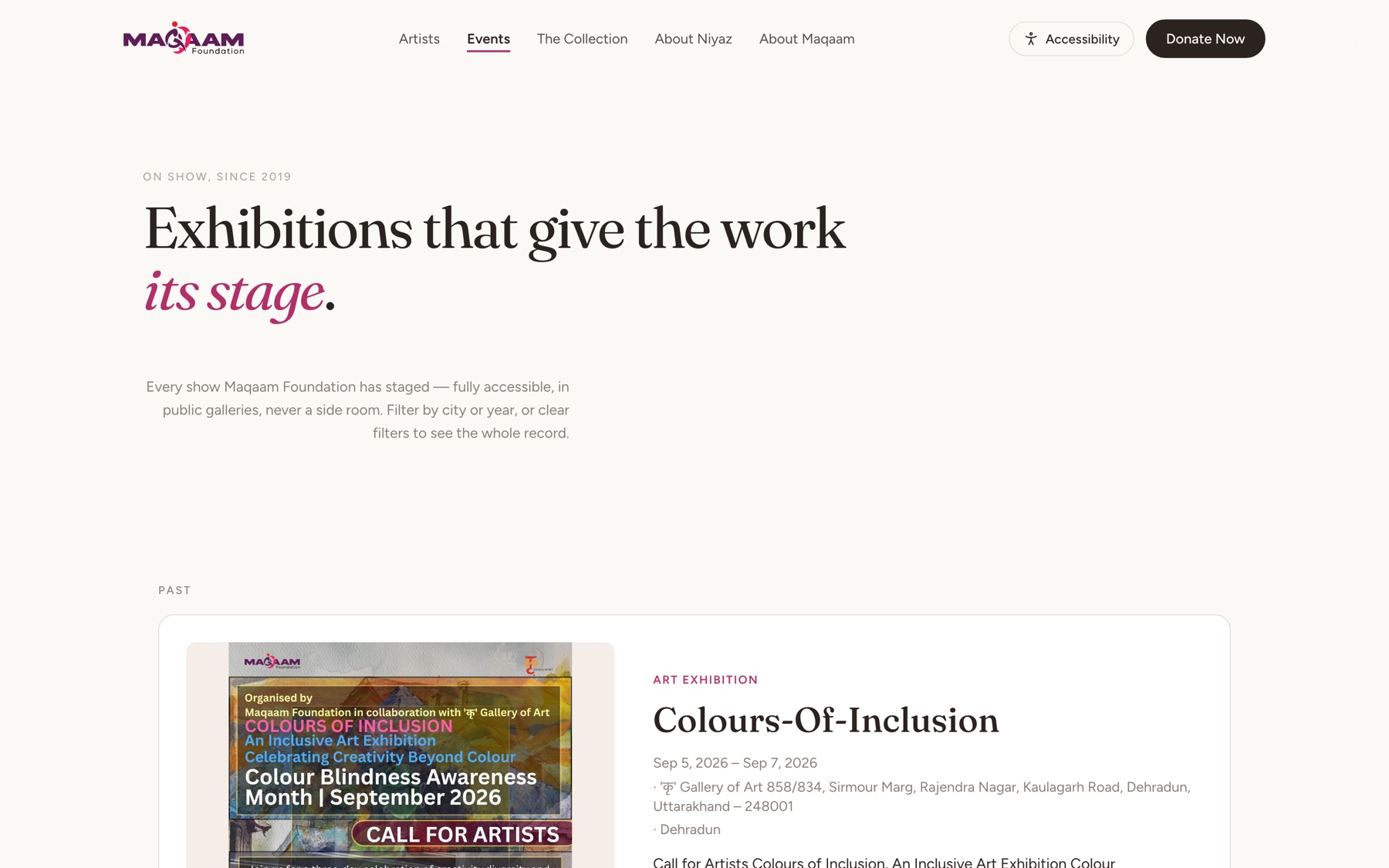
Events — a record of exhibitions and programmes that could continue growing instead of disappearing after an Instagram post or WhatsApp forward.
This structure shaped both the website and the CMS behind it.
Designing for independence
Building the website was only half of the problem. If every new artist, event or update required coming back to me, I would have simply replaced one dependency with another.
That became an important constraint for the project.
I built Maqaam in Framer, with separate CMS collections for artists and events. Instead of editing layouts or touching code, Niyaz could add the information once and let the system handle the page. I then taught him how to use it.
I shouldn't need to be there for the website to keep growing.
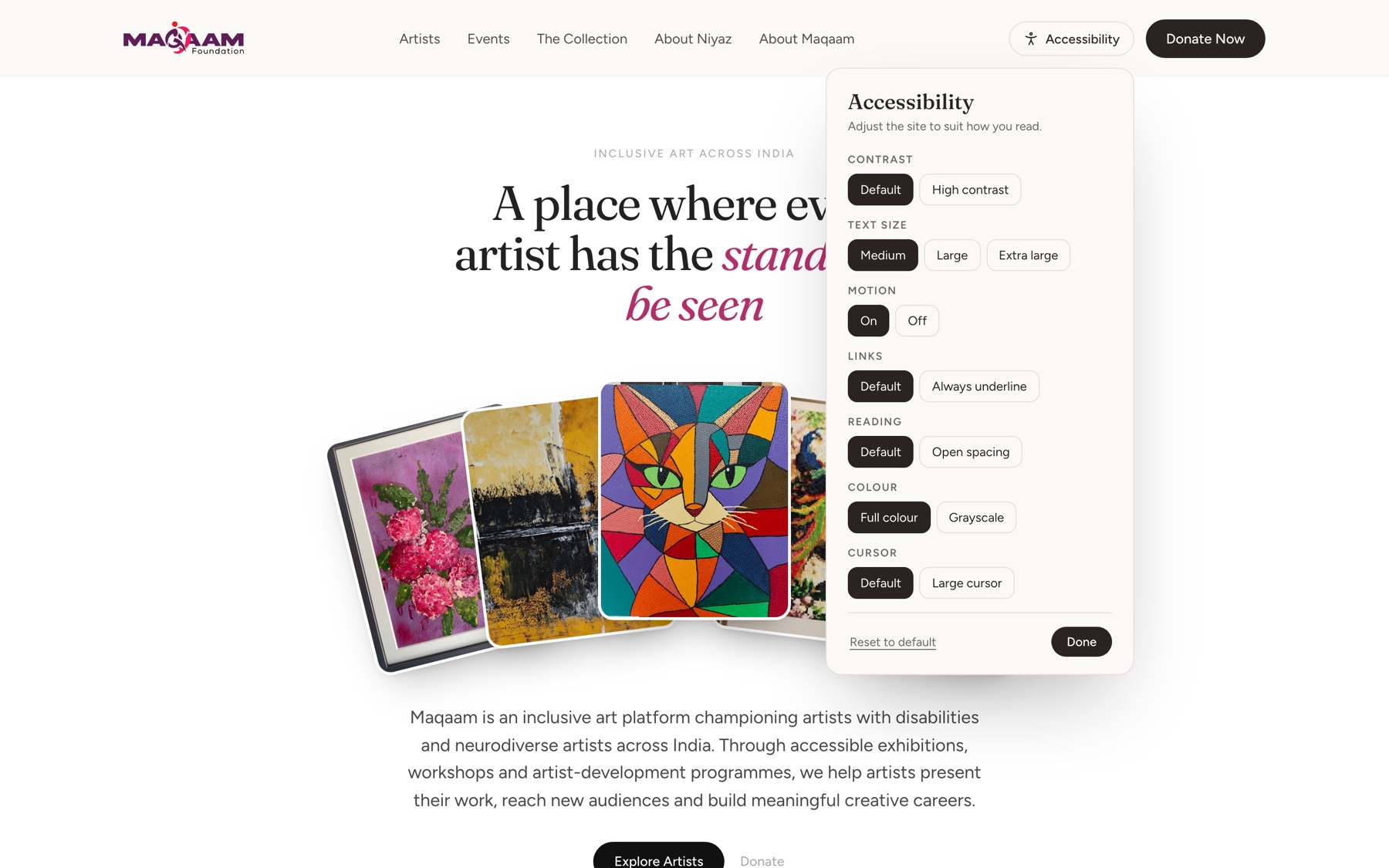
Accessibility couldn't just be part of the subject matter
Accessibility is already deeply connected to Maqaam's work.
The website therefore includes accessibility controls that allow visitors to adjust the experience according to their needs.
Rather than treating accessibility as an additional feature at the end of the project, it became part of how the digital presence represented the organisation itself.
Building it differently
I worked independently across the project — from organising the information and designing the experience to building the final website and CMS.
I also used Claude as part of the development process, which allowed me to move between designing, building and iterating without turning the project into a traditional design-to-development handoff.
For a small foundation, that mattered. The solution didn't need a large technical stack or a developer maintaining a custom CMS. It needed to be useful, manageable and sustainable.
What changed
By August 2026, Maqaam had moved from having no website to having its own structured digital presence. Artists had permanent profiles. Events could remain discoverable after they ended. Years of material had a clearer structure. Niyaz could publish new content himself.
And Maqaam had a single place it could point people towards instead of relying primarily on Instagram posts and WhatsApp forwards.
After launch, the foundation saw increased website visitors and broader visibility, although we weren't tracking enough analytics at the time to attach a reliable number to that increase.
For me, that is also why the CMS matters as much as the interface.
The project wasn't finished when I published the website. It was finished when Maqaam could continue publishing without me.
MyGooru
Designing across a connected learning ecosystem: Learner, Instructor, Mentor, Library and the design system under them.