

Building the digital commerce platform for a heritage fragrance brand
Goloka had been making incense and fragrance products for decades. Its digital presence hadn't evolved in the same way.
Contents · 14 chapters
Building the digital commerce platform for a heritage fragrance brand
Goloka had been making incense and fragrance products for decades, with customers across India and international markets. But its digital presence hadn't evolved in the same way.
I started working with Goloka to establish a direct commerce experience — taking responsibility across product design, Shopify, catalogue structure, SEO and implementation.
What started as building an online store has since grown into a larger engagement: rethinking the retail experience, building a custom Shopify theme, and exploring how the same platform can support dealers and future Goloka brands.
- ROLE
- Product Designer · Development
- SCOPE
- UX/UI · Shopify · E-commerce · SEO · Development
- ENGAGEMENT
- End-to-end · Ongoing
- CURRENT STAGE
- Phase 1 live · Phase 2 in progress
The product existed. The digital experience didn't.
Goloka already had an established catalogue and customer base.
Its older website, however, worked primarily as a digital catalogue. Customers could browse ranges and learn about the company, but purchasing wasn't integrated into the core experience.
The gap wasn't simply an outdated interface.
The business needed the foundations of a modern commerce experience — structured products and collections, direct purchasing, responsive behaviour, taxation, search visibility and a storefront that could eventually grow with the brand.
Establishing the commerce foundation
I started with the fundamentals rather than trying to create an elaborate redesign immediately.
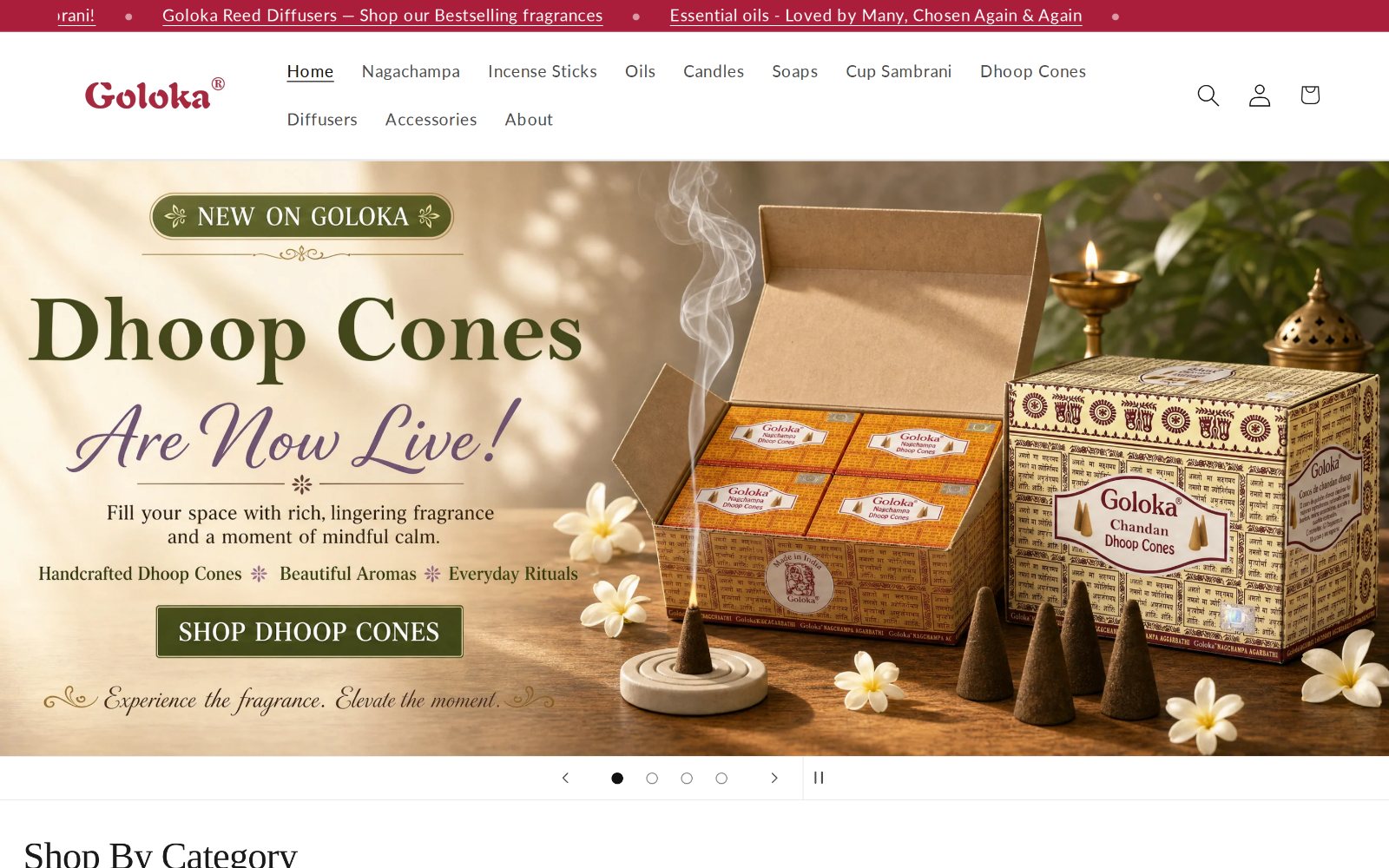
Goloka has a broad catalogue across incense, oils, candles, diffusers, soaps, dhoop and other fragrance products. That catalogue first needed to work as a coherent online store.
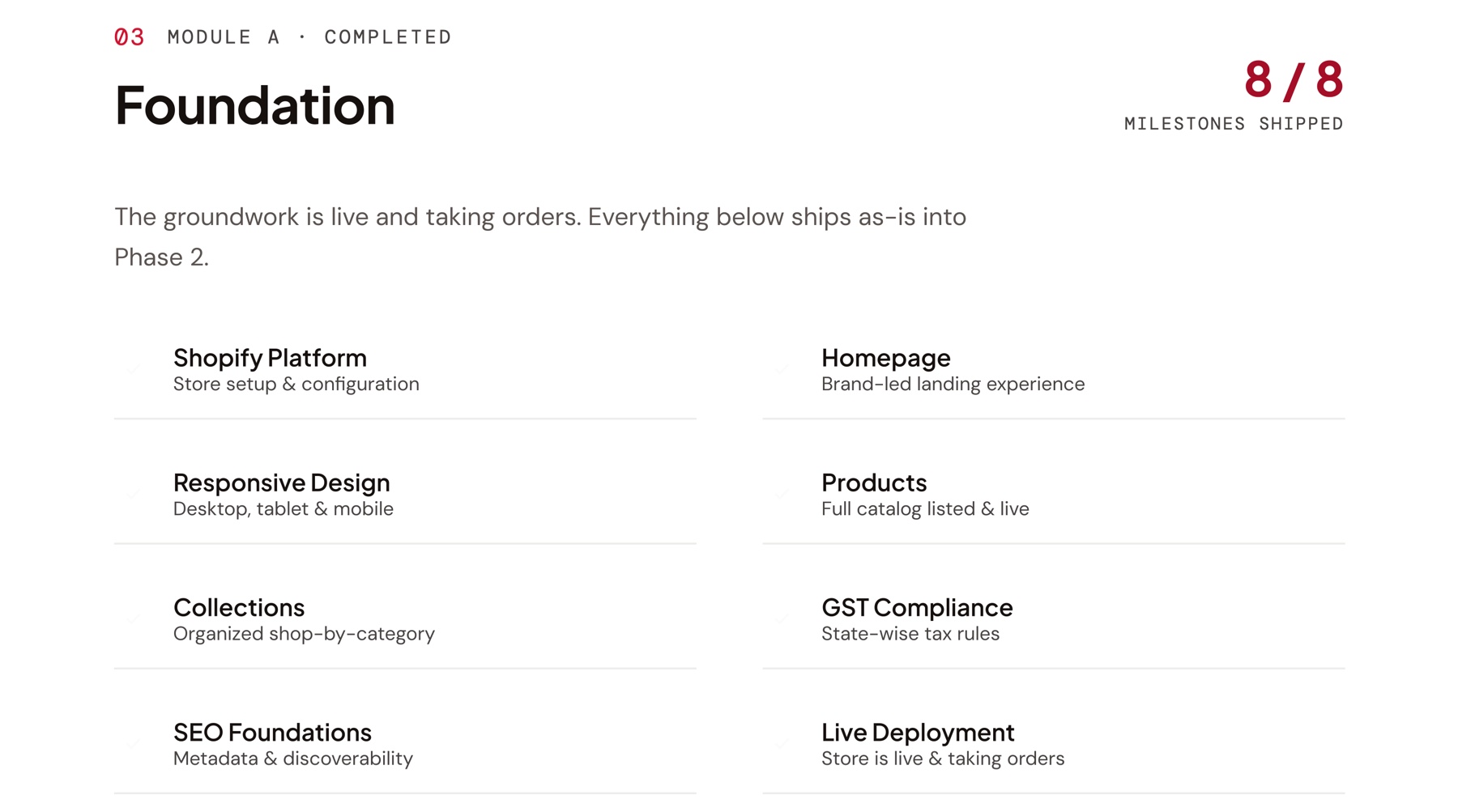
I worked across the storefront — from setting up Shopify and structuring products and collections to responsive behaviour, GST configuration, SEO foundations and deployment.
The first phase resulted in a functioning commerce foundation that is now live and taking orders.
A large catalogue needed hierarchy before it needed decoration.
One of the less visible parts of the project was organising how people move through Goloka's range.
The storefront couldn't treat dozens of products as one flat catalogue. Collections needed to create understandable entry points while individual product pages needed enough information for someone to make a purchase decision.
That meant thinking about the relationship between: Category → Collection → Product → Cart → Checkout.
Rather than designing each page independently, I started treating them as parts of one shopping journey.
- – collections
- – products
- – collections
- – products
- – collections
- – products
Designing the storefront
With the commerce structure in place, the interface could begin doing more than displaying inventory.
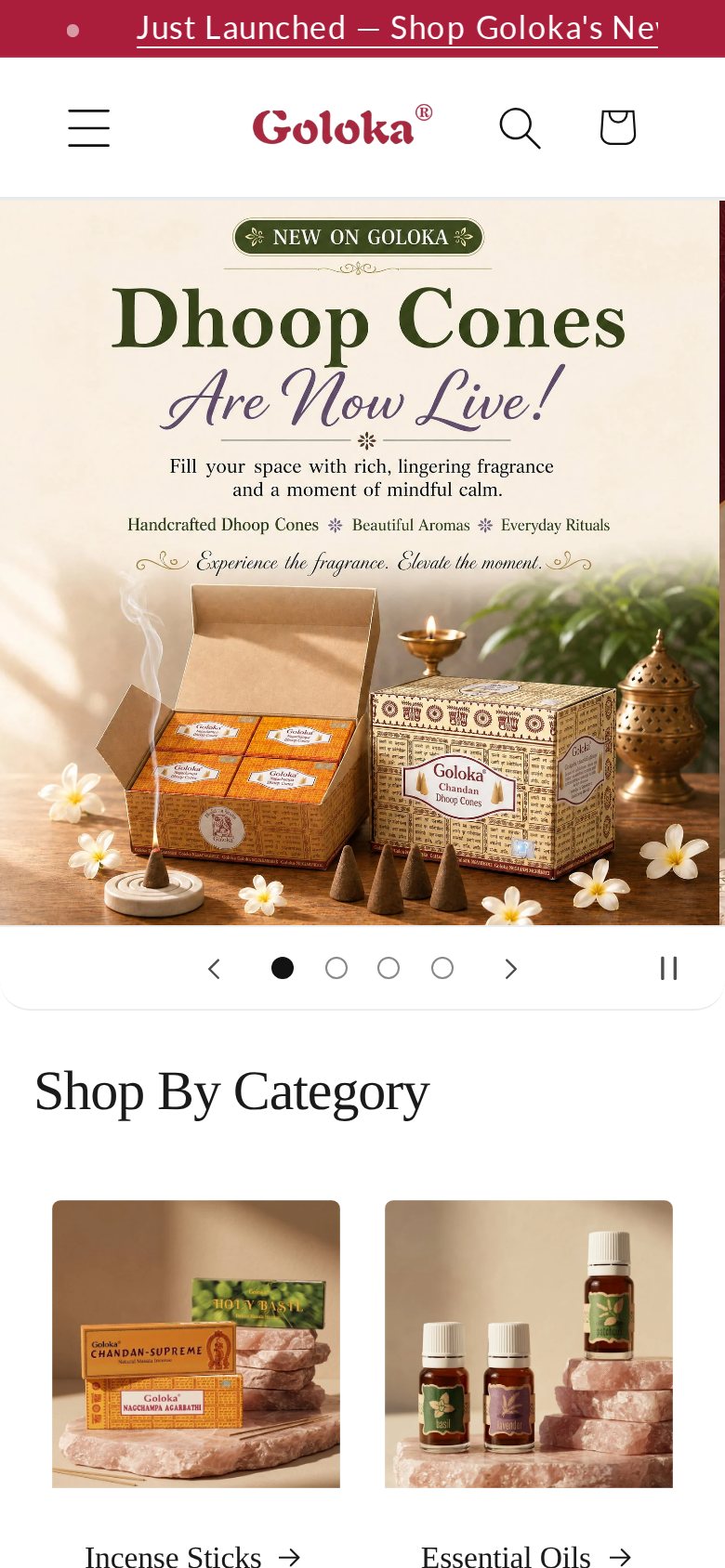
The experience needed to balance two things: help people shop quickly, and retain the character of Goloka as a fragrance brand.
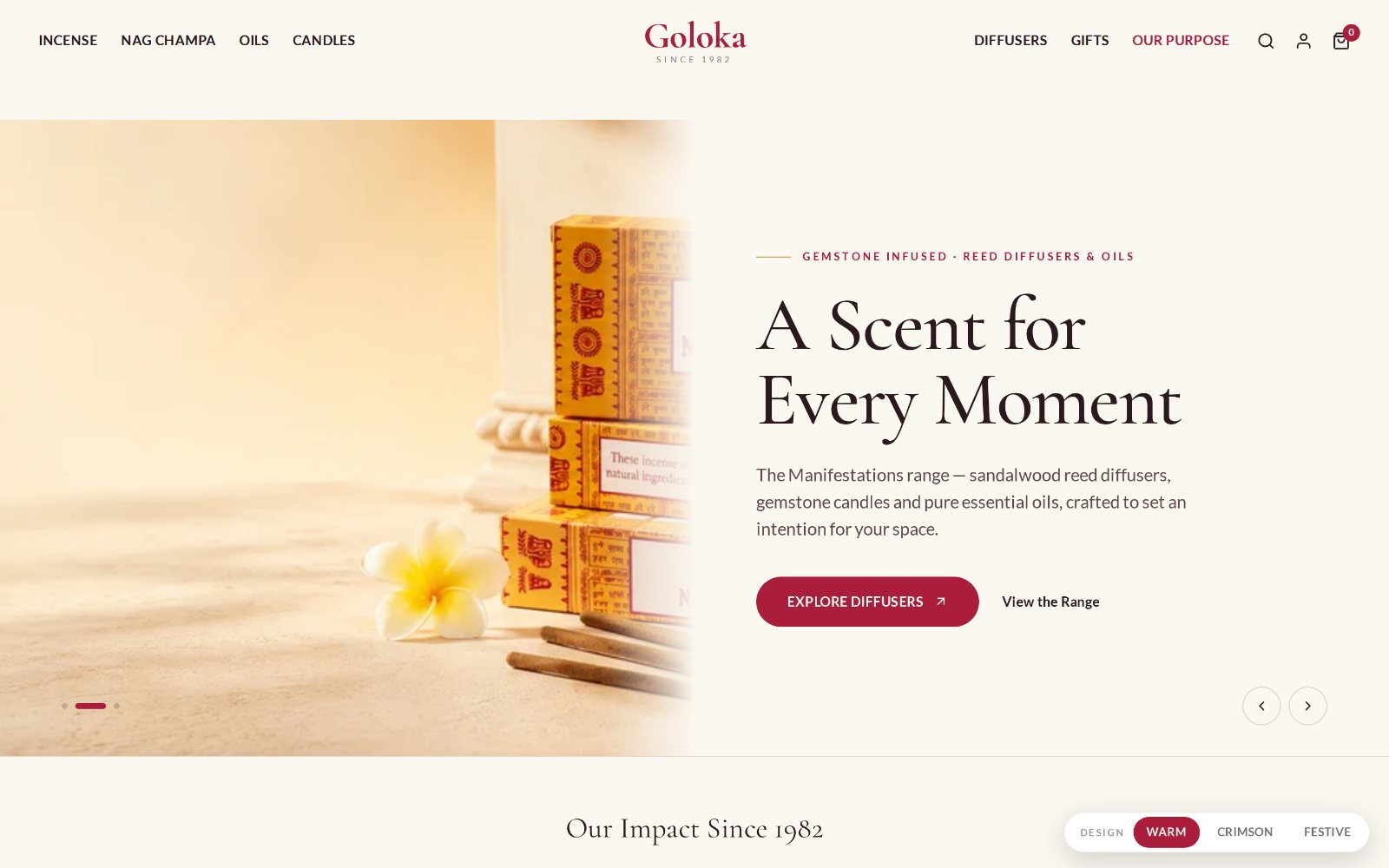
That influenced how I approached collection pages, product presentation, navigation, responsive layouts and brand content.
The storefront became the layer connecting Goloka's catalogue, story and commerce.
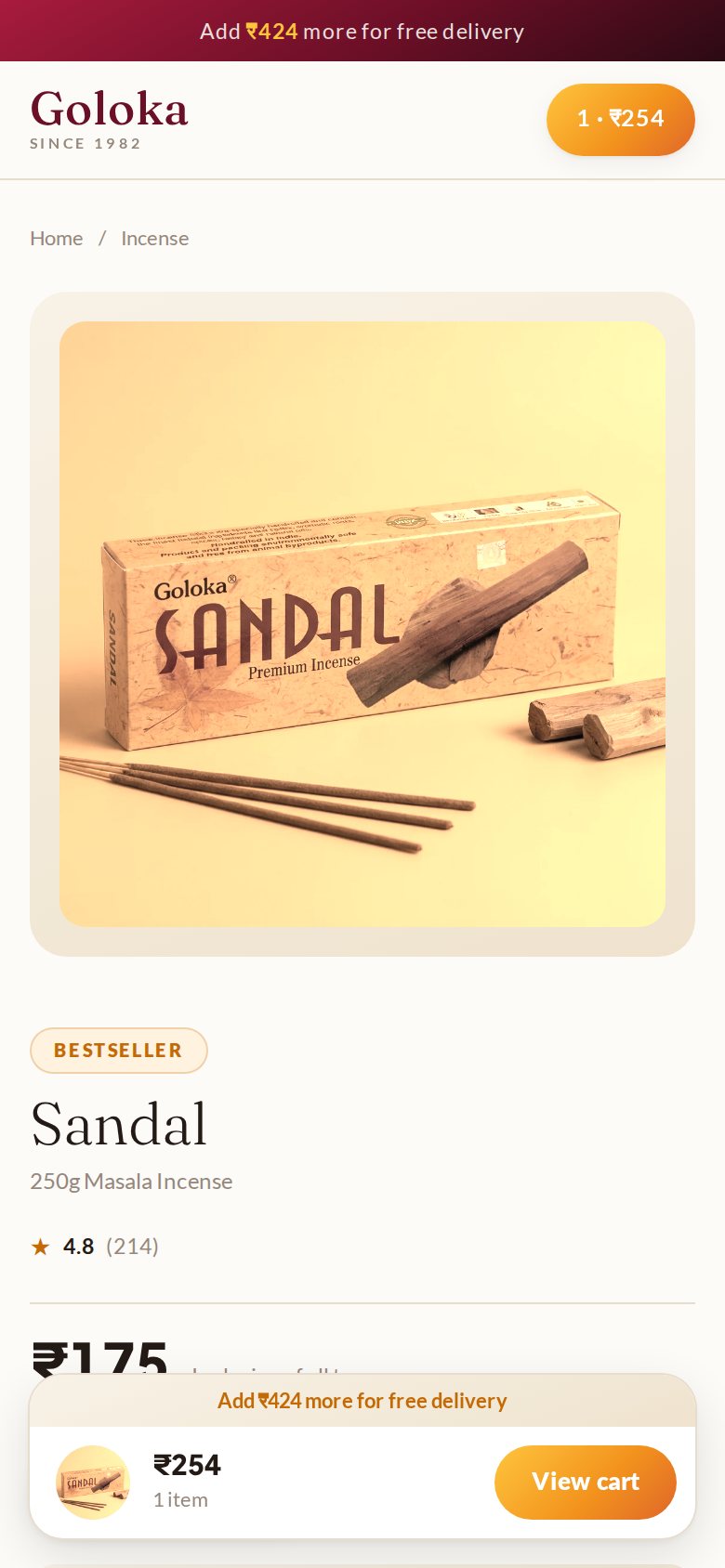
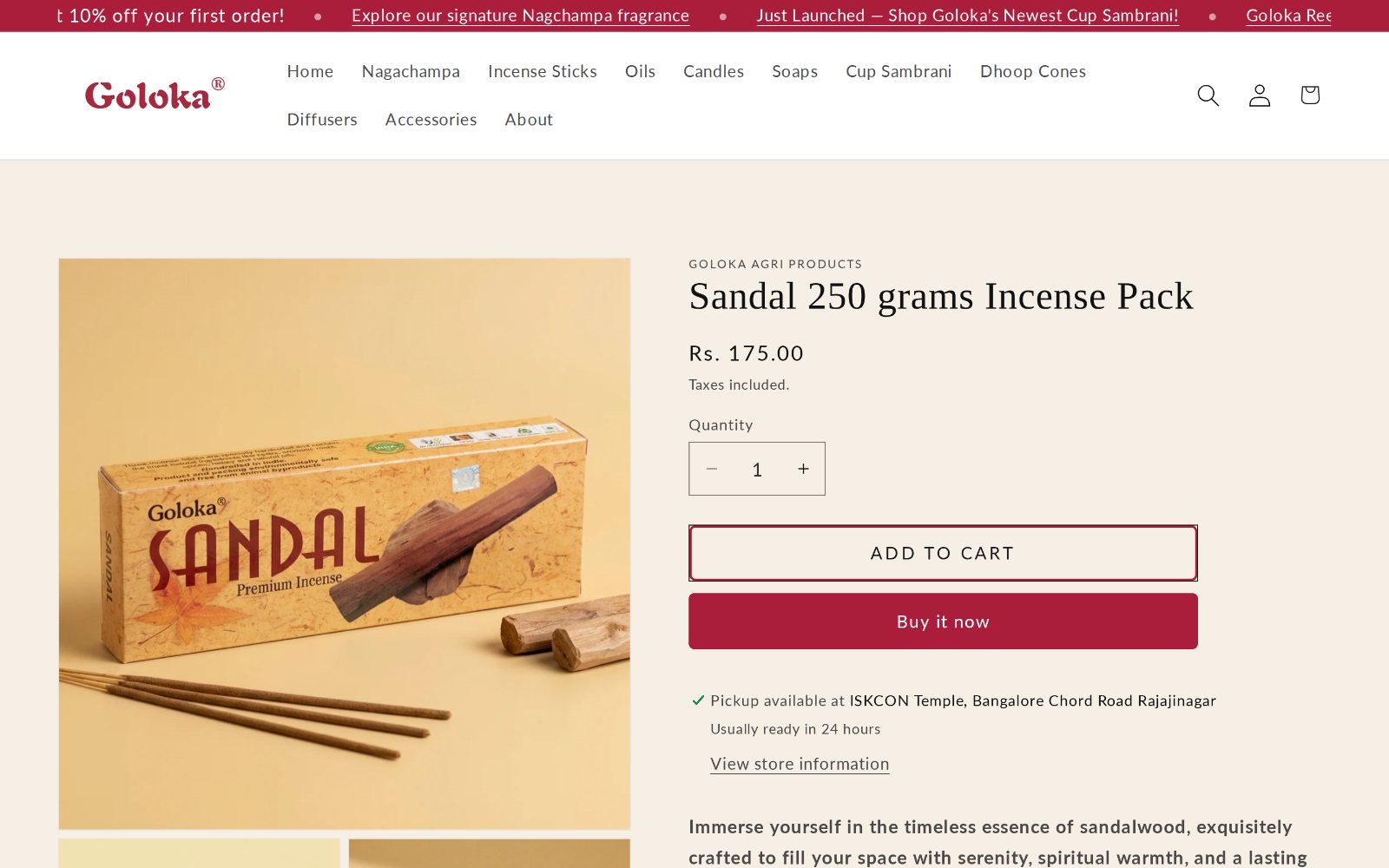
Selling fragrance online means communicating something people cannot experience through a screen.
Unlike many physical products, fragrance is difficult to evaluate digitally.
A product page therefore couldn't rely only on a pack shot, title and price.
The experience needed to provide enough context around the product and its fragrance while keeping purchasing straightforward.
That pushed the product experience toward a balance of story, information and action.
Search was part of the product
SEO wasn't something I wanted to add after designing the storefront.
For a commerce business, discovery often begins before someone reaches the homepage.
So alongside the store structure, I worked on the foundations for search discoverability — including metadata and the way products and collections were structured.
It changed how I thought about the website. The homepage wasn't necessarily the beginning of the journey.
Shipping the first version
The first phase gave Goloka the infrastructure it previously didn't have. The store went live and started taking orders.
But getting it live also changed the nature of the project. Once the basic commerce problems were solved, the limitations of the first implementation became easier to see.
The next question wasn't: How do we improve this website?
What should Goloka's commerce experience become next?
Moving beyond the first storefront
I'm currently working on the next phase of Goloka's digital commerce experience.
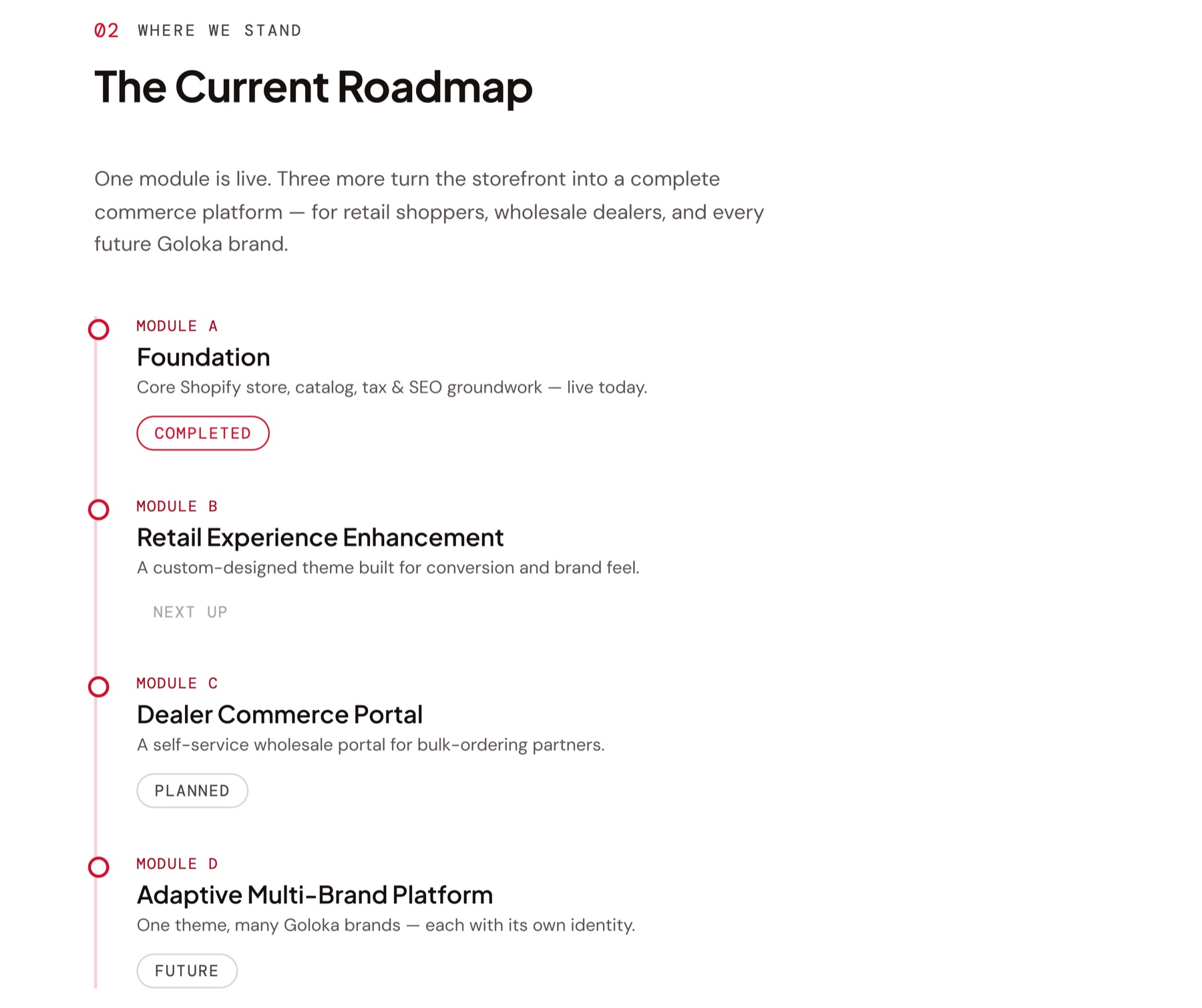
Instead of continuing to layer changes onto the existing storefront, I'm approaching this as a more deliberate product and technical system.
These are defined as separate stages in the current roadmap rather than features being presented as already shipped.
From configuring a theme to owning the experience
The first version proved the commerce foundation. The next version gives me the opportunity to rethink the experience with fewer constraints.
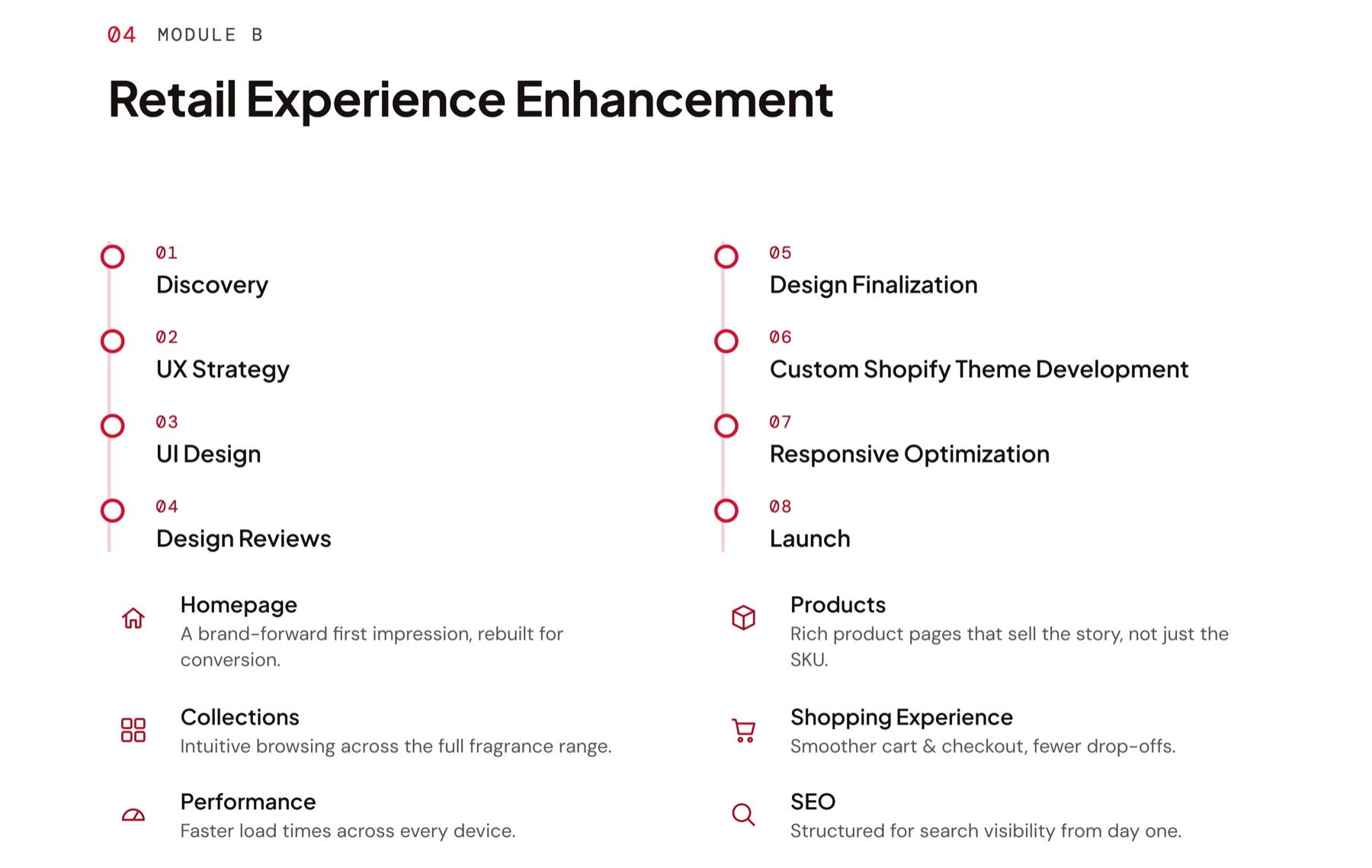
I'm now designing and developing a custom Shopify theme, looking again at the homepage, collections, product pages, shopping experience, responsiveness, performance and search foundations.
Instead of treating design and development as two separate handoffs, I'm using Claude Code as part of the implementation process, allowing me to move more directly between an interaction decision and how that decision behaves in the actual product.
The goal isn't to use AI to generate a storefront. It's to shorten the distance between the experience I'm designing and the experience customers actually use.
Retail isn't the whole business
Goloka also works with wholesale partners.
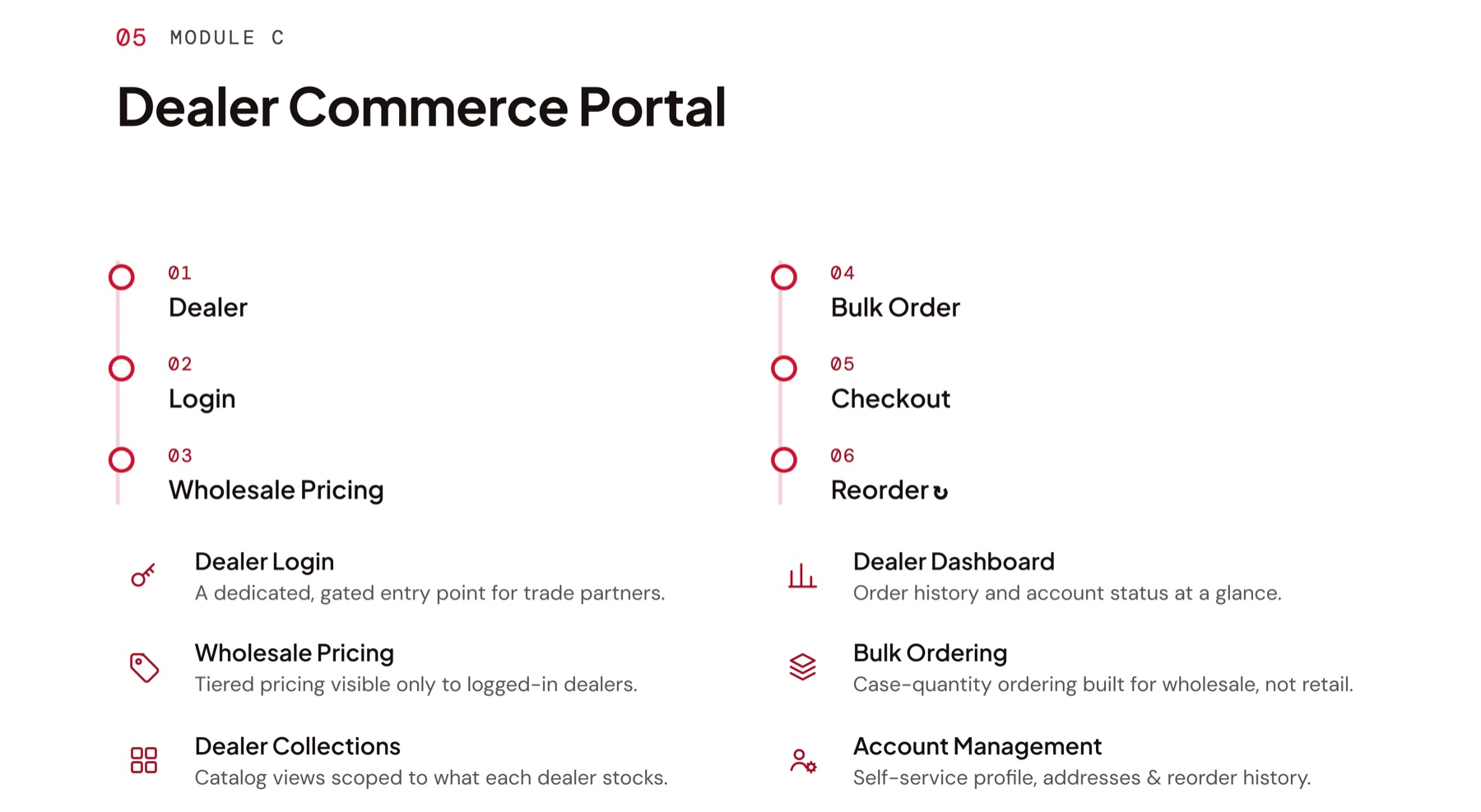
Their needs aren't simply a larger version of the consumer checkout. A dealer needs different information and different actions — including gated access, wholesale pricing, bulk quantities, relevant catalogue views, account information and repeat ordering.
The current roadmap includes dealer-specific pricing, bulk ordering, collections, order history and account management.
Designing for more than one brand
The longer-term challenge is larger still.
If additional Goloka brands need their own digital presence, rebuilding an independent storefront for each one creates unnecessary duplication.
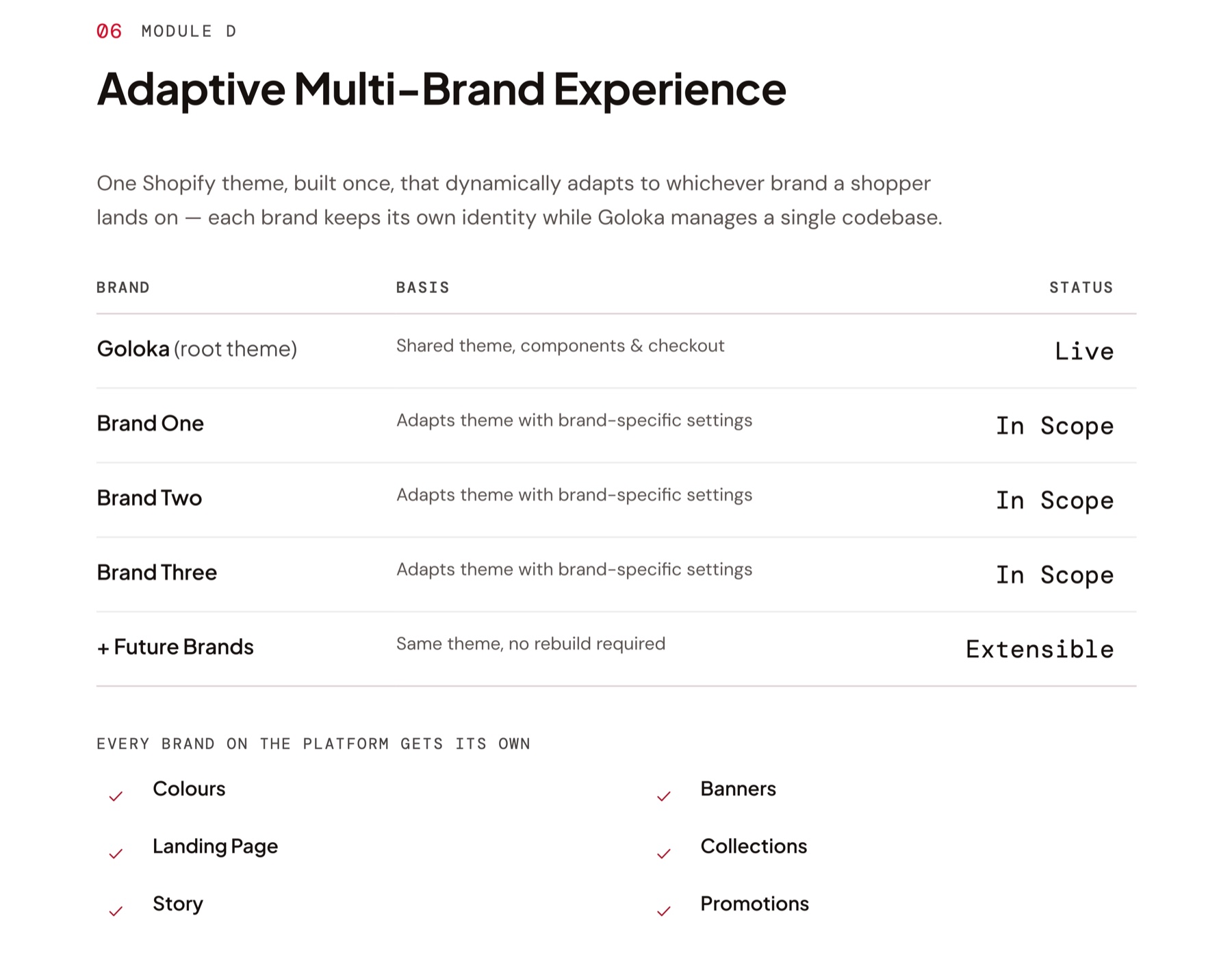
The proposed architecture therefore explores a shared Shopify theme that can adapt its identity depending on the brand using it.
The underlying components and commerce logic remain shared while brand-level attributes — including colours, banners, landing pages, collections, stories and promotions — can change.
One foundation. Different identities.
- – identity
- – colours
- – content
- – collections
- – identity
- – colours
- – content
- – collections
- – identity
- – colours
- – content
- – collections
The platform I'm building toward
Retail, dealers and future brands, on one shared foundation.
- – discovery
- – collections
- – products
- – checkout
- – login
- – pricing
- – bulk order
- – reorder
- – identity
- – content
- – collections
- – commerce
From a website to infrastructure.
The visible output is a new storefront. But the more important change has been underneath it.
Goloka moved from having a website that primarily represented its catalogue to having a functioning direct-commerce foundation.
I started by solving the immediate problem — getting the catalogue structured and commerce live. Now I'm working further into the system: how the brand should sell, how retail and wholesale experiences differ, how design and implementation can happen closer together, and how the underlying platform can support what Goloka builds next.
The project is still evolving. And that's part of the story.
FocusNotch
A time tracker for freelancers that lives in the MacBook notch, with the Mac’s pop-ups, notifications, music and meetings routed through it. I designed it and built it in SwiftUI and AppKit.